Riding the wave of the artificial intelligence (AI) revolution, SK has entered a new heyday by posting record-high profitability in its semiconductor business. In particular, on the back of its overwhelming dominance in the high-bandwidth memory (HBM) market—an essential component for AI servers—the company has set a new milestone in its annual performance, with revenue hitting an all-time high and solidifying its status as a “memory powerhouse.” Having completed its rebalancing, the SK Group now encompasses the full spectrum of global AI solutions. This article examines how SK Group is transforming itself from a semiconductor parts supplier into an architect of the global AI ecosystem.
On the 12th, SK On achieved a result that defied market expectations in the Ministry of Climate, Energy and Environment’s second central energy storage system (hereinafter ESS) tender, worth more than KRW 1 trillion. Having failed to secure a single project in last year’s first tender, SK On this time won more than half of the total volume, emerging at once as the biggest beneficiary. Inside and outside the battery industry, the outcome is being viewed as a game changer.
This achievement is significant in that it marks a strategic turning point for SK On’s ESS (Energy Storage System) battery business. Having previously focused on electric vehicle (EV) batteries, SK On is now using the domestic ESS market as a springboard to establish a full-scale mass production system for lithium iron phosphate (LFP) batteries, thereby creating an opportunity to simultaneously improve its profit structure and diversify its portfolio.
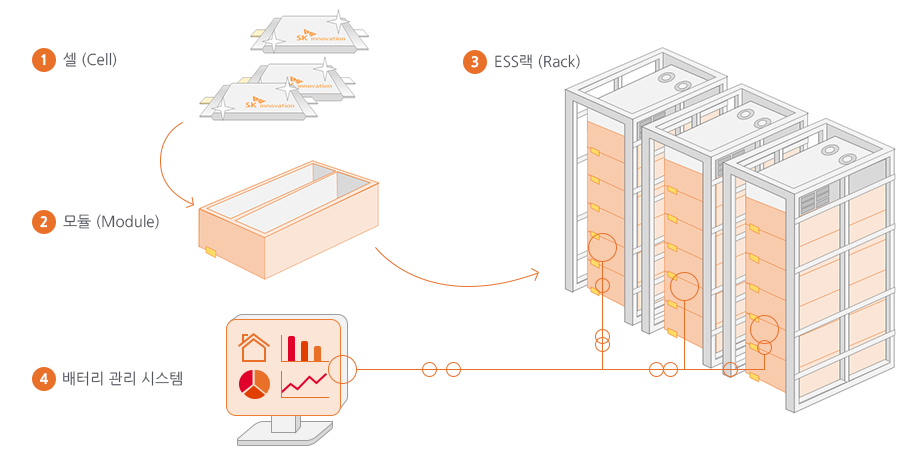
ESS is a system that stores generated electricity in a storage device and supplies it when power is needed, thereby improving energy efficiency. An ESS consists of batteries, power conversion systems (PCS), and energy management systems (EMS). It is used across various applications, including industrial, residential, and EV charging. By storing electricity when supply is ample and discharging it when power is scarce or tariffs are high, it helps reduce the burden on the power grid.
In this tender, SK On presented a plan to use domestically produced materials and to manufacture ESS-use LFP batteries within Korea. It is assessed to have gained an advantage over competitors in the government’s core evaluation categories of “industrial and economic contribution” and “fire and facility safety.” The company adopted a strategy that broke away from the traditional price-focused competition in the ESS market and instead emphasized supply chain stability and spillover effects on domestic industry, aligning well with policy direction.
In this round, SK On won 284 megawatts (MW) out of a total of 565MW, securing a 50.3% share. It will supply batteries to three of seven project sites, including six locations in South Jeolla Province and one in Jeju. Compared with its complete absence of awards in last year’s first tender, this is seen as a result that has reshaped the market landscape in just one year.
Leveraging this, SK On plans to convert part of the production lines at its Seosan Plant 2 in South Chungcheong Province into ESS-use LFP battery production lines and to build an annual mass production system of 3 gigawatt-hours (GWh) from the second half of this year. In addition, depending on future tender results, the company is reportedly reviewing an internal plan to expand production capacity to as much as 6GWh. Some observers say this tender outcome could be the starting signal for a restructuring of the domestic ESS battery supply chain.
As the stagnation in EV demand becomes prolonged, the strategic importance of the ESS business to the battery industry is increasing. With the growth in demand for EV batteries slowing, ESS is emerging as a new growth pillar and a means of defending earnings. Accordingly, major battery makers are accelerating efforts to diversify their portfolios by expanding their ESS businesses.
LG Energy Solution has set its ESS battery order target for this year at more than 90GWh, up from last year. Samsung SDI has also set a goal of increasing revenue in its ESS segment by more than 50% year-on-year. SK On has stated that it will position its ESS business as a next-generation growth driver and aim to secure annual orders of more than 20GWh.
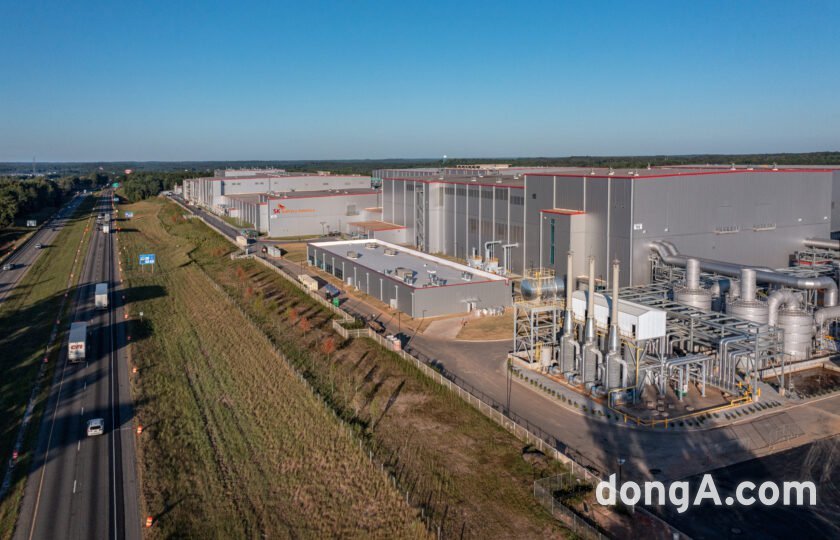
SK On’s battery plant in Georgia, USA.
SK On formally launched in 2021
Battery research began in early 1990sSK On is a battery specialist company that was officially launched in 2021 when SK Innovation spun off its battery and exploration & production (E&P) businesses into separate entities. In August that year, SK Innovation’s board approved the split, which was finalized at an extraordinary shareholders’ meeting in September with an 80.2% approval rate. Thereafter, the battery business entity “SK On” and the oil exploration entity “SK Earthon” were launched, with SK Innovation holding 100% stakes in both subsidiaries.
The name SK On encapsulates the dual meanings of “switching on” and “continuing.” SK Innovation explained that the name reflects its ambition to play a key role in the era of electrification through its battery business and to leap forward as the global No. 1 company.
SK On began battery research in the early 1990s and grew into SK Innovation’s battery division. Since 2017, it has expanded rapidly through full-scale investment, recording more than double-digit revenue growth each year and increasing its scale. With the spin-off as a turning point, SK On has been pursuing a capacity expansion strategy with the goal of becoming a leading global battery company by 2030.
Overcoming “safety and output” limits with solid-state batteriesTechnological competition in the EV battery market is fiercer than ever. Automakers and battery makers alike are focusing not only on driving range and charging speed, but above all on safety and cost reduction as core tasks.
To respond to these market changes, SK On is accelerating development of technologies that can address both safety and cost challenges at the same time. The company has selected four core R&D tasks and is concentrating company-wide capabilities on them: ▲ solid-state batteries and ▲ thermal propagation prevention solutions to enhance “safety,” and ▲ dry electrode and ▲ cell-to-pack (CTP) to secure “cost competitiveness.”
SK On is conducting commercialization research on solid-state batteries centered on polymer-oxide composite batteries. These composite batteries combine polymer electrolytes with oxide electrolytes, providing smoother ion transport compared with conventional single solid electrolytes. At the same time, they offer improved heat resistance and chemical stability, which is advantageous in reducing fire risks.
This technology serves as an intermediate step toward all-solid-state batteries and is also meaningful in that it has high compatibility with existing lithium-ion battery production processes. Because it can be adopted gradually without the need to build large-scale new facilities, it is viewed as a way to reduce cost burdens during commercialization. Based on this, SK On ultimately aims to develop sulfide-based all-solid-state batteries.
Sulfide-based all-solid-state batteries are next-generation batteries that use 100% solid electrolytes. SK On is currently developing them with an initial commercialization target of an energy density of around 800Wh/ℓ. The company then plans to raise energy density to 1000Wh/ℓ. The goal is to store more energy within the same volume and substantially increase driving range.
In the second half of 2025, SK On completed a sulfide-based all-solid-state battery pilot plant of about 4,600㎡ at its Future Technology Center in Daejeon, and is using the facility to verify mass production processes and optimize materials and processes in parallel. The company has set 2029 as the target timeline for commercializing all-solid-state batteries.
Thermal propagation prevention solutions to pre-empt safety incidentsA battery pack is composed of hundreds of cells. Electrochemical reactions in each cell generate heat, and if the heat from a specific cell transfers to surrounding cells, it can trigger a chain reaction of rising temperatures. This is called “thermal propagation (TP)” and is cited as a major cause of fire accidents.
To reduce this risk, SK On is applying various thermal propagation prevention solutions. The bottom cooling method employs a structure in which coolant flows under the battery and absorbs the heat generated from the cells. This has the advantage of being applicable without major changes to vehicle design.
The immersion cooling method removes heat by directly submerging cells in insulating oil. In internal tests, this method showed more than twice the thermal control performance compared with bottom cooling. It offers significantly improved safety by rapidly dissipating heat and effectively preventing heat generated in a particular cell from spreading to neighboring cells.
The large-area cooling method uses a structure in which cooling plates envelop the entire surface of the cells, maximizing cooling area and enhancing heat suppression performance. This approach is assessed to provide around three times the heat suppression effect compared with bottom cooling.
SK On was the first in the industry to apply large-area cooling technology to pouch-type cells. By combining this with a cell-to-pack structure that eliminates modules, the company has simultaneously improved cooling efficiency and structural stability.
Dry electrodes deliver production efficiency and eco-friendlinessSK On is also driving manufacturing process innovation through dry electrode technology. The traditional wet process uses solvents to create a slurry of active materials, which is then coated onto metal foil and dried. This requires large-scale drying equipment and substantial energy consumption.
The dry electrode process, by contrast, manufactures active materials in a solid powder state and then coats and compresses them onto metal foil without using solvents. This eliminates the drying step, significantly reducing energy use and shortening process time. It also enables high-loading electrodes, increasing the amount of energy that can be stored per unit area.
However, the technology is highly challenging, requiring precise process control to achieve uniform coating and consistent density. If commercialization succeeds, it is expected to deliver both cost reduction and lower carbon emissions, and is therefore regarded as a next-generation core manufacturing technology.
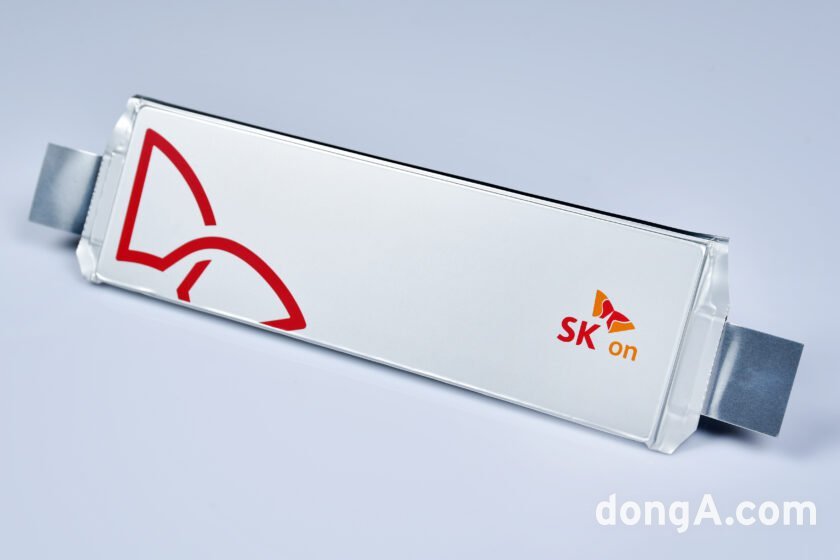
SK On Advanced SF battery.
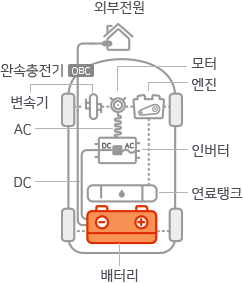
Maximizing capacity and volume through cell-to-pack (CTP) innovationCell-to-pack (CTP) is a design approach in which cells are integrated directly into the pack without modules, maximizing the utilization of internal battery space. By reducing structural components previously occupied by modules, more cells can be placed within the same volume, thereby increasing energy density and driving range.
SK On is focusing on developing CTP technology based on pouch-type cells. It has improved light-weighting and space utilization by using aluminum pouch film and adopted a structure in which cooling plates are placed between cells instead of insulation material, enabling direct heat control. This approach enhances spatial efficiency while suppressing thermal propagation.
Notably, SK On was the first in the industry to implement pouch-type CTP with large-area cooling technology. This has simultaneously enhanced the cooling performance and durability of battery packs. The company also expects cost reduction effects from structural simplification.
SK On stated, “To secure both safety and cost competitiveness, we are concentrating our capabilities on four core R&D tasks,” adding, “We plan to strengthen battery safety through solid-state batteries and thermal propagation suppression technologies, and enhance market competitiveness through innovative manufacturing technologies such as dry electrodes and cell-to-pack.”
Securing next-generation battery demand in the defense sectorIn parallel, SK On is accelerating diversification of its customer portfolio by positioning the defense sector as a next-generation demand source for its batteries. The strategy is interpreted as an attempt to move beyond an EV-centric business structure and secure mid- to long-term growth drivers by expanding supply into military and unmanned system markets, which require high reliability and safety.
Recently, SK On has reportedly been discussing battery supply options with a US defense contractor for AI-based unmanned underwater vehicles (UUVs). A major European defense company is also said to be exploring the possibility of using SK On batteries in vertical take-off and landing (e-VTOL) aircraft, helicopters, and cargo planes.
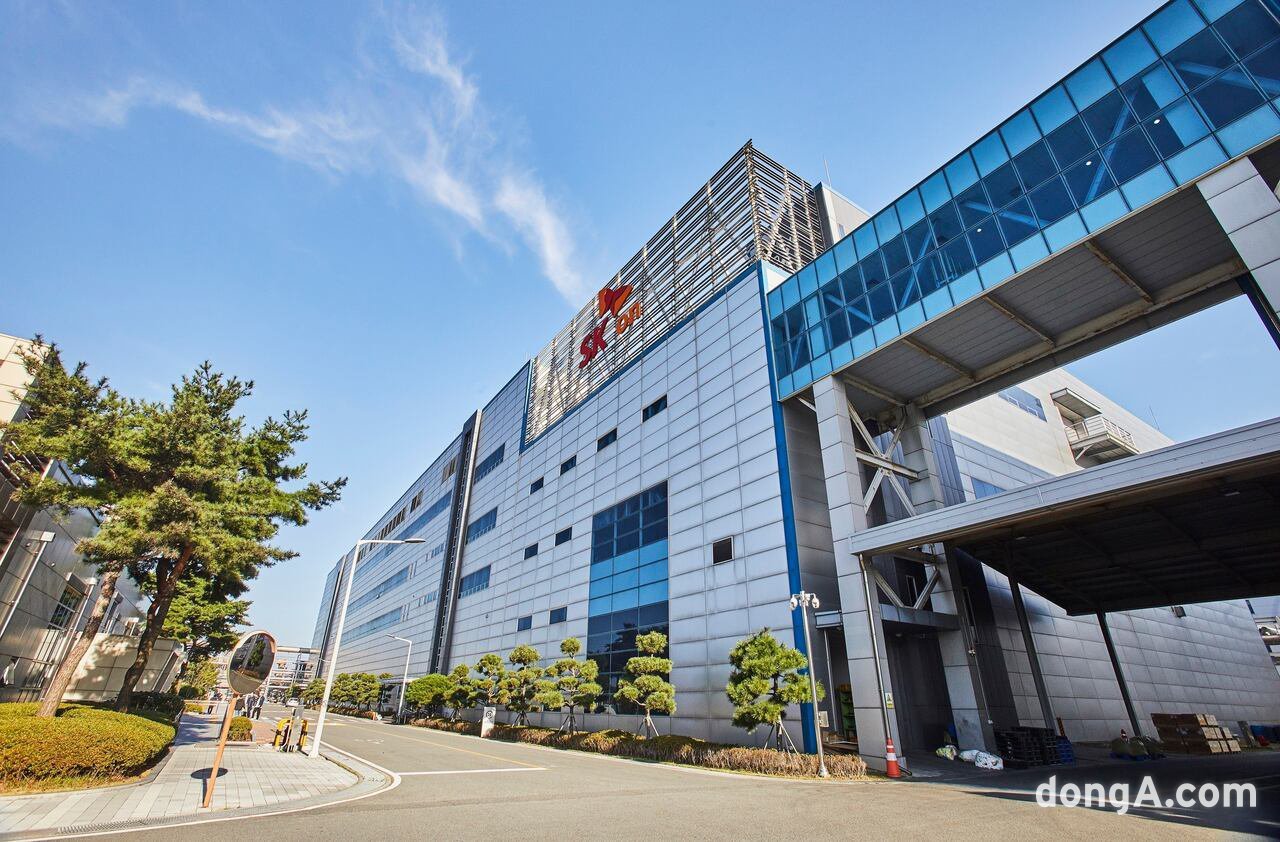
SK On’s Seosan plant.
Defense-use batteries have clearly distinct requirements from general commercial batteries. Unmanned underwater and ground vehicles and airborne platforms need high energy density to extend operational range, flight endurance, and mission duration. They also require instantaneous power output for rapid acceleration, maneuvering, and operating various onboard equipment. Moreover, because of the nature of military operations, they must operate reliably under harsh conditions such as shocks, vibrations, and extreme temperature fluctuations, making safety and reliability verification key factors.
For these reasons, defense-use batteries are viewed as requiring long-term technology validation and trust-building rather than short-term mass production. Industry observers believe that SK On is likely to consider ultra-high nickel ternary batteries, which excel in energy density, as a strong candidate for defense applications in the short term, and all-solid-state batteries in the mid- to long term. The actual supply timeline is expected to become visible from as early as 2028 after a series of tests and evaluations.
SK On has already secured application cases in the defense unmanned platform sector. It supplies battery cells for Hyundai Rotem’s next-generation multi-purpose unmanned vehicle program. Hyundai Rotem is reportedly using these cells to produce modules and packs, which are then mounted on unmanned vehicles for demonstration testing. The company is enhancing its unmanned capabilities by applying AI-based autonomous driving and swarm control technologies to its unmanned vehicle lineup, including the “HR-Sherpa.”
SK On’s technological capabilities in all-solid-state batteries are cited as a key foundation for further customer acquisition in the defense market. Defense unmanned systems must deliver both high energy and high output in limited space while meeting stringent safety standards, and many expect that once all-solid-state batteries are commercialized, their application range in this area will expand significantly.
SK On has set 2029 as the target date for commercializing all-solid-state batteries and is developing sulfide-based all-solid-state batteries and lithium metal batteries at its all-solid-state battery pilot plant within the Daejeon Future Technology Center. It is accelerating development by leveraging cell design and process technologies through collaboration with US-based Solid Power and by sourcing sulfide-based solid electrolytes from the company.

An overview of SK On in Q&A format.
Q1. What is SK On’s battery business strategy?
SK On is expanding its application markets beyond an EV battery-centric business structure into the ESS and defense sectors. This is a strategy to diversify demand sources based on the same core battery technologies (energy density, thermal management, reliability) in preparation for slower growth in EV demand. It can be interpreted as an effort to secure mid- to long-term earnings stability by building a multi-axis portfolio spanning EVs, ESS, and defense.
Q2. What are the key competitive factors in EV battery technology?
Key competitive factors for EV batteries include ▲ energy density (driving range), ▲ output performance (acceleration and responsiveness), ▲ charging speed, and ▲ safety. SK On is pursuing a strategy to strengthen safety and output stability through solid-state batteries and thermal propagation prevention solutions, while improving system efficiency and cost competitiveness through CTP (cell-to-pack) and dry electrode technologies. This is viewed
ⓒ dongA.com. All rights reserved. Reproduction, redistribution, or use for AI training prohibited.
Popular News







 About Dong-A Ilbo