German Michelin 2-star chef Alexander Herrmann visits Sempio research facilities for culinary exchange Deep interest in the umami and harmonious balance of Korean jang that supports vegetable-centric cuisine Shared understanding on scientific analysis of tradition and its modern succession, spotlight on innovative products like green pea soy sauce Affirming the stature of Korean fermentation in the global market while sharing cross-border gastronomic research philosophies
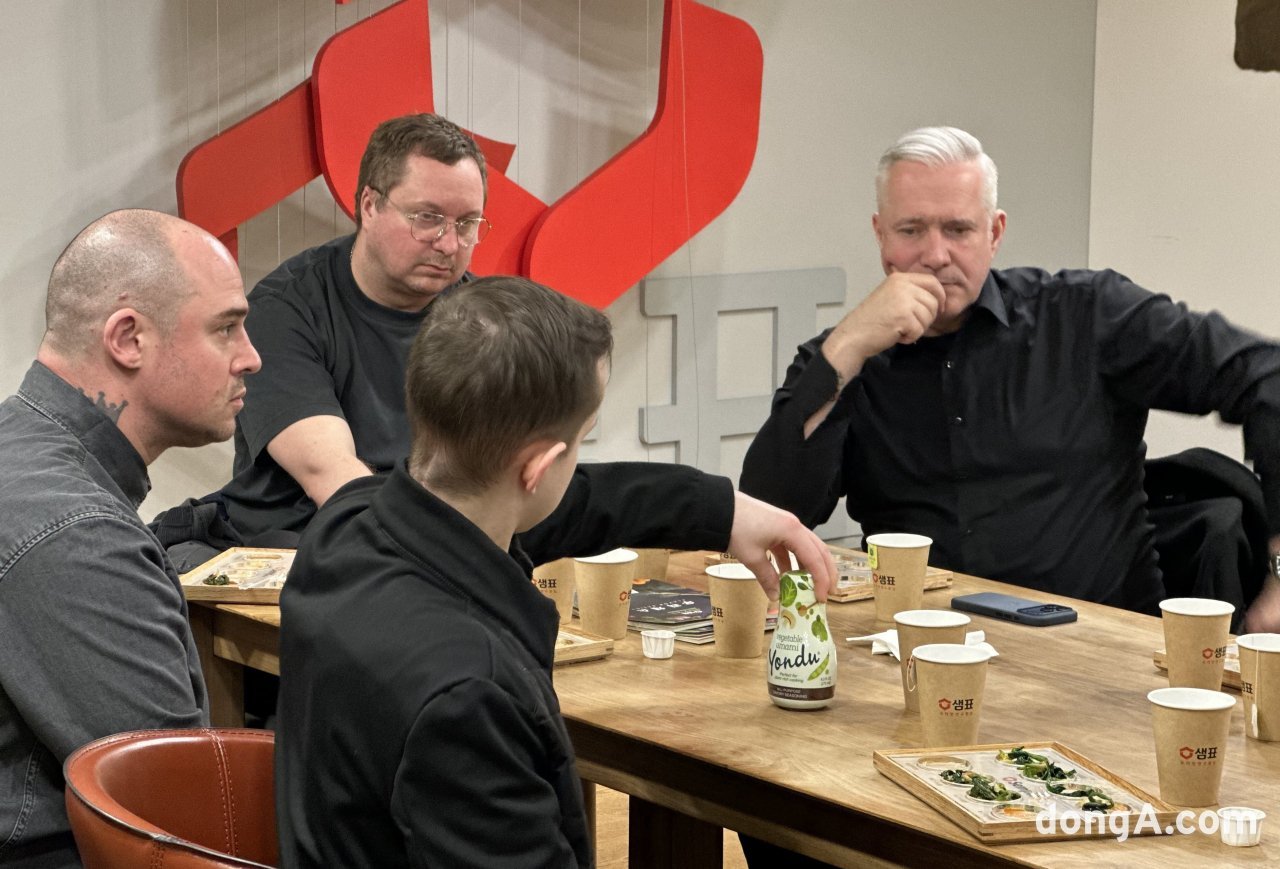
Chef Alexander Herrmann (far right)
On the 4th, Sempio announced that German Michelin two-star chef Alexander Herrmann visited its “Centre for Korean Flavor Research” located in Jung-gu, Seoul. The visit was arranged at the chef’s request to directly experience jang (traditional Korean sauces and pastes) and fermentation (a process in which organic matter is decomposed by the action of microorganisms to create new components), which form the roots of Korean food culture.
Alexander Herrmann leads the restaurant “Aura” in Wirsberg, Germany, and is highly regarded for his excellence in presenting regional ingredients with a modern sensibility. Through his in-house research lab “Future Lab Anima,” he has practiced his distinct culinary philosophy by analyzing ingredients and developing new menus.
Visiting the research facility, Chef Herrmann took note of the fact that Korea has the highest vegetable consumption among member countries of the Organisation for Economic Co-operation and Development (OECD). He was deeply impressed by how Korea’s jang culture, which enhances the natural flavors of ingredients while compensating for any lack of depth, has been a key driver in enabling a vegetable-centered diet.
In particular, he asked detailed questions about the principles of amino acids (the basic units that constitute proteins and provide a distinctive umami taste) formed during soybean fermentation and how this process enhances the completion of a dish. After tasting vegetables seasoned with Sempio’s jang, he expressed surprise at the layered depth of flavor inherent in jang. He also showed great interest in the explanation that the deep, subtle spiciness of gochujang (red chili paste) originates from the fermentation of meju (fermented soybean blocks).
Chef Herrmann also resonated with Sempio’s efforts to systematize tradition through science. He highly valued Sempio’s jang project, a cultural initiative launched in 2010 to promote the value of traditional Korean jang globally, as well as the jang concept map produced in collaboration with the culinary science research center Alicia, which systematically organizes the pairing of jang with ingredients from various countries.
He also offered a positive outlook on localized products such as pea-based soy sauce developed for consumers with soybean allergies and organic gochujang with adjusted salinity tailored to modern tastes. Herrmann’s team shared that they are also conducting research by brewing their own soy sauce and, while exchanging knowledge, promised to share the results of their work in the future.
A Sempio representative assessed that it was highly significant that the company’s research-based systematization of Korean flavors had been recognized by international experts. The representative added that Sempio would continue to work with culinary researchers around the world to actively promote Korea’s beneficial food culture globally.
Kim Sang-jun
AI-translated with ChatGPT. Provided as is; original Korean text prevails.
ⓒ dongA.com. All rights reserved. Reproduction, redistribution, or use for AI training prohibited.










 About Dong-A Ilbo