Agriculture remains a core industry in the Vietnamese economy. As of 2024, it accounts for about 11.86% of gross domestic product (GDP), and one-quarter of total employment works in agriculture. The problem is that as production increases, so does the environmental burden. With fertilizer use rising rapidly, residual nitrogen in the soil is causing acidification and leading to water pollution and greenhouse gas emissions in a recurring vicious cycle. Although the Vietnamese government is encouraging the use of eco-friendly fertilizers, farmers in the field find it difficult to focus solely on the environment at the expense of crop growth.
A startup has stepped in to address this gap. Plantner, which set the goal of developing “fertilizer that enables robust crop growth without leaving residues in the soil,” began to design a solution with support from CTS, a technology-based development cooperation program of the Korea International Cooperation Agency (KOICA).
Source: KOICATransforming Vietnamese agricultureThe challenge of Korean startup ‘Plantner’Shin Jeong-woo, CEO of Plantner, who had long been interested in international development cooperation projects, naturally recalled Vietnam, where he had stayed for about a month as an overseas volunteer before founding the company. During market research, Shin set a clear goal: to develop an eco-friendly fertilizer that contributes to crop growth while not leaving residues in the soil.
Shin applied to CTS with only an idea for developing eco-friendly fertilizer and was selected for the “Seed 1” phase after the program recognized its potential.
Regarding his experience participating in the CTS program, Shin said, “I received various forms of support over the course of a year, but the decisive factor was the financial support.” Early-stage startups must endure long periods without revenue. Many companies suspend operations during this process due to lack of funds. CTS provides up to KRW 400 million in the Seed 1 phase and up to KRW 700 million in the Seed 2 phase. With CTS support, Plantner was also able to advance its technology development and business model.
Plantner focused most intensely during the support period on PoC (Proof of Concept), that is, on-site validation. Fertilizer performance varies significantly depending on soil characteristics by country and region. Even after a prototype is completed, localization is essential. The company established a test farm of about 100 pyeong in Vietnam, applied the fertilizer previously used by local farmers to 33 pyeong, the most widely used fertilizer in the Vietnamese market to another 33 pyeong, and Plantner’s eco-friendly fertilizer to the remaining 33 pyeong. It then collected soil samples weekly to analyze soil conditions and compared crop growth. It took about one year to develop fertilizers that could maximize growth for Vietnam’s major crops, such as watermelon, cabbage, and durian.
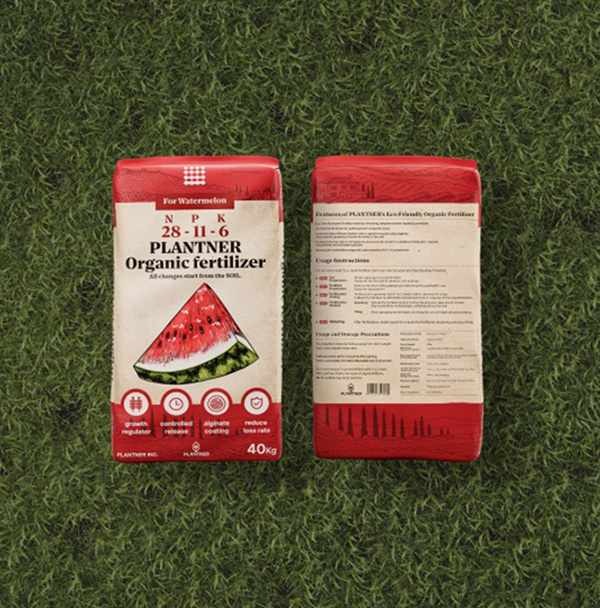
Plantner develops and supplies eco-friendly organic fertilizers. Source: Plantner
Recently, Plantner was also selected for the CTS Seed 2 phase. While it had previously conducted validation with the market limited to individual provinces in Vietnam, it now plans to expand pilot projects to the entire Mekong Delta region. Shin said, “We expect the number of beneficiary farms to increase by nearly 20-fold compared to before.”
Overcoming ODA limitations with startup agilityKOICA’s ‘CTS Program’CTS is one of the component projects under the Development Innovation Program (DIP), an innovative development cooperation program operated by KOICA. DIP is designed as a structure that combines public development assistance (ODA) with the technologies and business models of private companies. While traditional, government-led ODA has focused on solving problems per se, DIP aims to leverage the innovativeness of private companies to enhance both the efficiency and sustainability of problem-solving.
Among these, CTS mainly targets early-stage startups. Its primary participants are companies that have technology and ideas but lack opportunities to test them in the field. Early-stage companies can move more nimbly than large corporations or public-sector-led actors and have the advantage of being able to design solutions tailored to specific local issues.
CTS operates as a phased support program. The Seed 0 phase supports prospective entrepreneurs and early startups to strengthen their capabilities in ODA-related technology ventures. It helps prospective founders build essential competencies through opportunities for field research, mentoring, and pitching training. In the Seed 1 phase, companies conduct technology development and small-scale on-site validation, accompanied by grants of up to KRW 400 million per project. The Seed 2 phase is for pilot commercialization of ideas whose technology development has been completed. It verifies feasibility through broader pilot projects and provides up to KRW 700 million per project. Finally, the TIPS-linked program is a fast-track that integrates Seed 1 and 2, enabling on-site validation and technology commercialization simultaneously, with support of up to KRW 1.1 billion per project.
Each phase goes beyond simply providing funds, focusing instead on strengthening the technical and business capabilities that companies need to execute and grow their businesses through acceleration. A KOICA official explained, “CTS is not a program that evaluates the completeness of a technology, but a structure that checks whether the technology and model actually work under local conditions,” adding, “The possibility of failure in the validation process is also assumed from the outset.”
‘Weplatt’ in IndonesiaRedefining problems through the fieldWeplatt is a company that has completed all CTS phases from Seed 0 to Seed 2. Although it has conducted pilot projects in Indonesia, it was not initially established with development cooperation as its primary goal. Core personnel who had worked in the field of water management for a long time had been experiencing structural limitations: while technology was advancing, water leakage rates were not systematically declining.
They had already developed an early model of an “intelligent leakage management system” when they joined CTS. They needed to verify whether their technology could actually be applied despite institutional and operational constraints in development cooperation settings and further, whether it could lead to commercialization.
Weplatt began with market research. As leakage rates increase, the finances of water utilities deteriorate, which in turn leads to underinvestment in facilities and insufficient staff training. Ultimately, leakages increase further. In this process, the biggest victims are ordinary citizens, especially vulnerable groups with low water accessibility. In developing countries, aging infrastructure and a lack of budget and manpower also made it difficult to apply advanced-country solutions as they are.
In the course of implementing the Seed 2 phase, the team visited several Indonesian cities to listen to local stakeholders. The responses from officials of local public water utilities (PDAMs) were similar: “We know there are leaks, but we do not know where to start.” In many cases, there were no professional standards or training systems for leak detection.
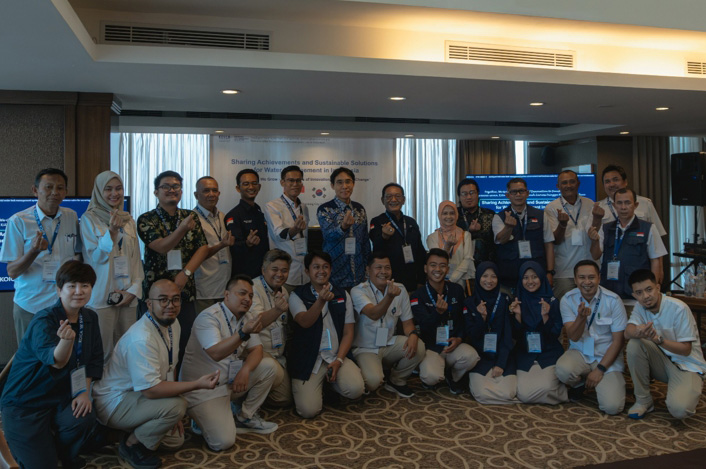
A workshop held by Weplatt for staff of water and wastewater utilities in local governments selected for CTS Seed 2 projects in Indonesia. Source: WeplattIn response, Weplatt came to view leakage not as a simple technical issue but as a problem of urban sustainability and trust in public services. The bigger issue was the lack of basic operating systems and infrastructure. Accordingly, the company redefined the problem from “a lack of leak detection technology” to “the absence of a leakage management industry and operating structure,” and reset its commercialization direction. A Weplatt representative said, “We focused on building a structure that could be implemented together with local stakeholders,” adding, “Thanks to the business structure provided by CTS, we were able to review our goals and outcomes step by step and use it as an opportunity to verify for ourselves whether the business could be sustained.”
Weplatt built trust with PDAM employees by listening to leak noise data together, demonstrating the detection process step by step, and repeatedly sharing small success stories. It is currently expanding its business by jointly designing leakage-reduction models based on relationships with local partners, water utilities, and associations.
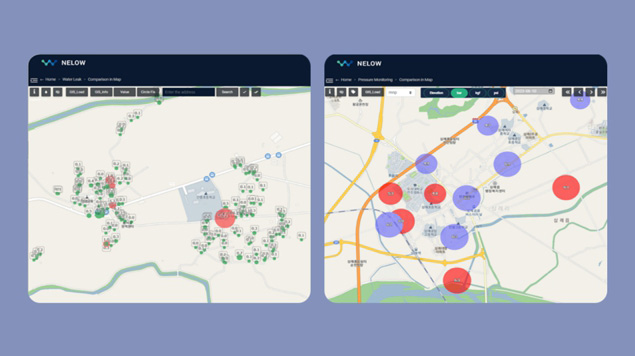
Leak inspection and monitoring process of Weplatt’s intelligent leakage management system. Source: WeplattContributing to solving global challengesthrough a decade of experimentation and resultsCTS began from the recognition of a need to address social issues in developing countries in a more detailed and rapid manner and has spent the past decade connecting prospective entrepreneurs and startups with development cooperation sites. To date, a total of 139 companies have participated. While there were only 10 partner organizations at the outset, the 2025 call for proposals expanded the number of new partners to 32. Seo Dong-seong, Director of KOICA’s Corporate Partnership Program Team, said, “In all quantitative metrics, including the total program budget, the size of individual projects, and the number of participating partners, we have achieved significant growth compared with 10 years ago, and we expect this upward trend to continue for the next few years,” adding, “This is an important change showing that CTS is evolving from a short-term program into a global ODA initiative.”
Of course, not every attempt has led to tangible results. In many cases, projects did not achieve the expected outcomes and failed to conclude successfully, or concluded without leaving meaningful results. Nonetheless, there is a prevailing assessment that the process of seeking optimal points of agreement through long-term, diversified communication, and ensuring that all participants recognize them, has been meaningful in itself. KOICA believes that these experiences will serve as an important foundation for CTS to become an even more effective business model going forward.
Recently, KOICA has strengthened the dedicated DIP organization and clearly defined the roles of overseas offices and related departments to support the growth of CTS. The goal is to further enhance interdepartmental collaboration and manage program operations more effectively. It is also actively promoting cooperation and outcome sharing with promising companies by continuously holding regular partner meetings and performance-sharing sessions.
Seo said, “CTS symbolizes a shift in the development cooperation paradigm toward innovation centered on technology and startups,” adding, “In particular, the emergence of early-stage startups as key actors in solving local problems is a very important change.” He continued, “It is realistically difficult for KOICA to secure expertise in all technology fields,” and explained, “We aim to become a platform that can quickly connect and utilize changing technologies and diverse opinions and demands.” The examples of Plantner and Weplatt demonstrate that this approach is functioning properly. Even in different sectors such as agriculture and water utilities, the processes of defining problems, validating them in the field, and assessing commercialization potential have progressed in similar ways. Technology is only one part; a structure that allows for validation is the core.
Seo added, “If the past 10 years have been a time to test various approaches in the field, we are now entering a phase of broadening their application scope based on those experiences,” and stated, “We plan to operate the program in a more systematic and efficient manner in order to reestablish the objectives of corporate cooperation and ODA and ensure stable continuity.” The aim is to establish a performance management system that balances corporate support and ODA perspectives and ultimately contribute to resolving global challenges and improving development effectiveness.
ⓒ dongA.com. All rights reserved. Reproduction, redistribution, or use for AI training prohibited.
Popular News









 About Dong-A Ilbo