Growth limited with telecom alone in the AI era… Competition shifts from subscriber gains to AI infrastructure
SKT establishes AI data center subsidiary
LG Uplus to invest an additional KRW 1.3 trillion in Paju
KT also expands AIDC infrastructure in Gasan
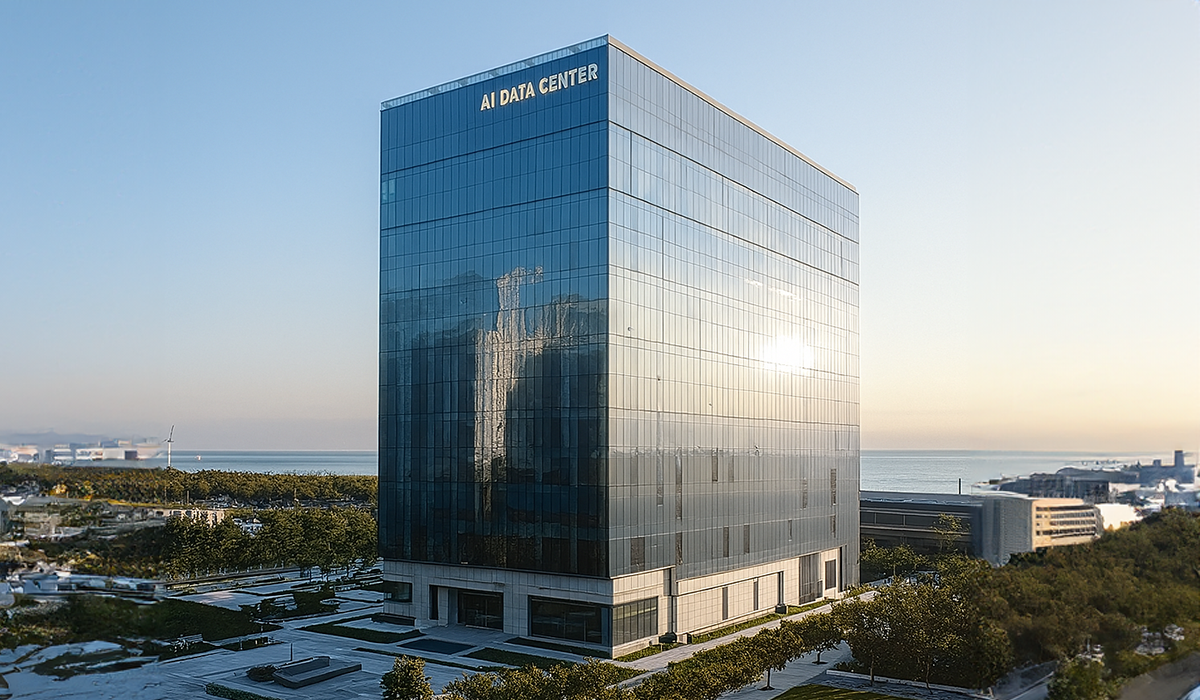
Artist’s rendering of “SK AI Data Center Ulsan,” under construction since 2025. Provided by SK Ecoplant
The three major mobile carriers in Korea are pushing to transform themselves from mobile communication companies into “artificial intelligence (AI) infrastructure enterprises.” With the domestic mobile telecommunications market saturated, there are inevitable limits to growth based solely on telecom services. Leveraging their experience in operating infrastructure such as existing telecommunications networks and internet data centers (IDCs), they are expanding into AI-related areas, including artificial intelligence data centers (AIDCs). Their strategic goal is to evolve from telecom operators into “AI factory owners” running AI factories.
● Telecom revenue stagnant… AIDCs show double-digit growth
According to second-quarter (April–June) earnings announcements by SK Telecom, KT and LG Uplus on the 12th, overall revenue at each company either slightly increased or declined, while revenue related to AI, including AIDCs, rose sharply. With the mobile communication market itself already saturated and growth in their core business constrained by the spread of mobile virtual network operators (MVNOs), AIDCs have emerged as a new growth business.
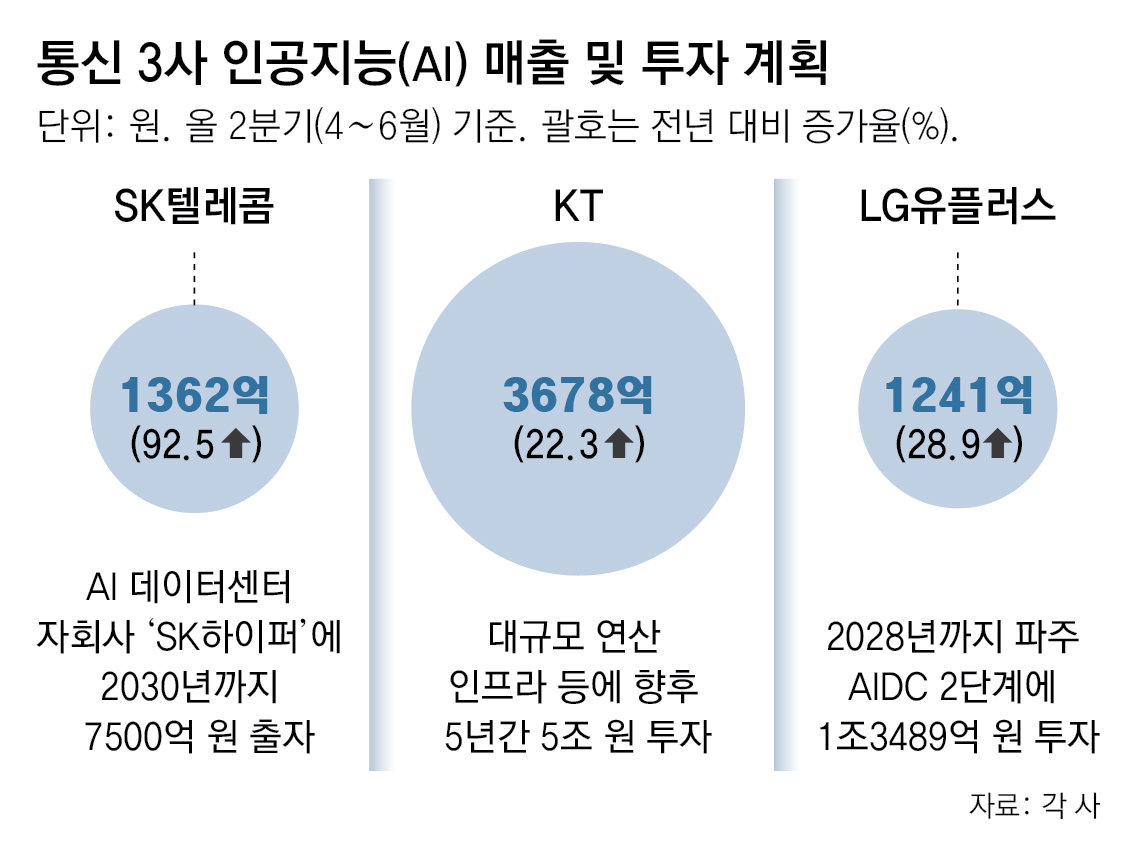
SK Telecom’s second-quarter revenue totaled KRW 4,359.1 billion, up only 0.5% year-on-year, but its AIDC revenue surged 92.5% to KRW 136.2 billion. At KT, revenue from its AX business, including KT Cloud, rose 22.3% year-on-year to KRW 367.8 billion. KT Cloud, which operates the Gasan AIDC, posted revenue of KRW 265.4 billion, up 19.8%. LG Uplus also saw mobile revenue grow just 0.9%, while its AIDC revenue reached KRW 124.1 billion, a 28.9% increase from the same period last year.
As AIDC-related revenue growth accelerates, competition among the three carriers is broadening from the traditional focus on “subscriber acquisition” to “securing AI infrastructure.” Because they operate nationwide telecom networks and existing IDCs, the carriers have strong potential to expand into AI infrastructure enterprises. With AI usage soaring and the need for AIDCs growing, they are moving to expand their businesses by leveraging their data center operation know-how. Jung Seok-geun, head of SK Telecom’s AI CIC and CEO of SK Hyper, said, “In the telecom business, the ability to make large-scale investments to build infrastructure and operate it reliably is essential,” adding, “This experience will be a very strong competitive edge in driving the AI infrastructure business.”
● Investment race in full swing… Key issue is ‘resource acquisition’
The three companies are also moving into a full-fledged investment race. SK Telecom has established SK Hyper, a subsidiary specializing in AIDC business development, while LG Uplus has decided on an additional investment of about KRW 1.3 trillion to build a 200MW-class AIDC in Paju, Gyeonggi Province. KT, centering on KT Cloud, is actively expanding infrastructure such as the Gasan AIDC in Geumcheon-gu, Seoul.
Securing the physical resources to support AI infrastructure has also become a new challenge. Operating tens of thousands of high-performance graphics processing units (GPUs) requires massive amounts of electricity, large-scale land, and essential cooling facilities and water. Telecommunications companies are now turning their attention to these traditional resources, which were mainly used in manufacturing.
Analysts say that the ultimate success of the carriers’ efforts to expand AI infrastructure will depend on investment funding and resource acquisition. Lee Sung-yeop, a professor at Korea University’s Graduate School of Management of Technology, said, “While many domestic companies are using overseas AIDCs, telecom operators are entering AI infrastructure to pioneer a new market,” adding, “Since resource acquisition is absolutely decisive in the success of an infrastructure business, companies are expected, in the long term, to engage in fierce competition over limited resources.”
ⓒ dongA.com. All rights reserved. Reproduction, redistribution, or use for AI training prohibited.
Popular News







 About Dong-A Ilbo