HL Mando is accelerating its transformation from a traditional automotive chassis parts manufacturer into a future mobility solutions company encompassing software-defined vehicle (SDV) components and robotics technology. Based on more than 60 years of accumulated precision control technologies in braking, steering, and suspension, as well as mass production capabilities, the company is pursuing a strategy to simultaneously target the next-generation electrified components market and the robot joint parts market.
New dedicated organization for robot actuators…entry into robot joint parts marketHL Mando recently carried out an organizational restructuring to establish a dedicated robot actuator unit, concretizing its entry into the humanoid robot parts market. Actuators—comprising precision motors, speed reducers, controllers, and more—are core drive devices that control the joint movements of robots and are high value-added components that account for more than 50% of total manufacturing costs for humanoid robots.
HL Mando is applying to actuator development the electronic control unit (ECU) design technologies, ultra-precision motor control algorithms, and global-level mass production and quality management know-how accumulated over decades of developing automotive steering and braking systems. The company aims not merely to supply individual parts, but to position itself as a key partner supplying highly reliable joint modules to global robot manufacturers. The market views these moves as an opportunity for the company to break away from the limitations of a traditional automotive parts supplier and be revalued as a new-growth robot solutions company.
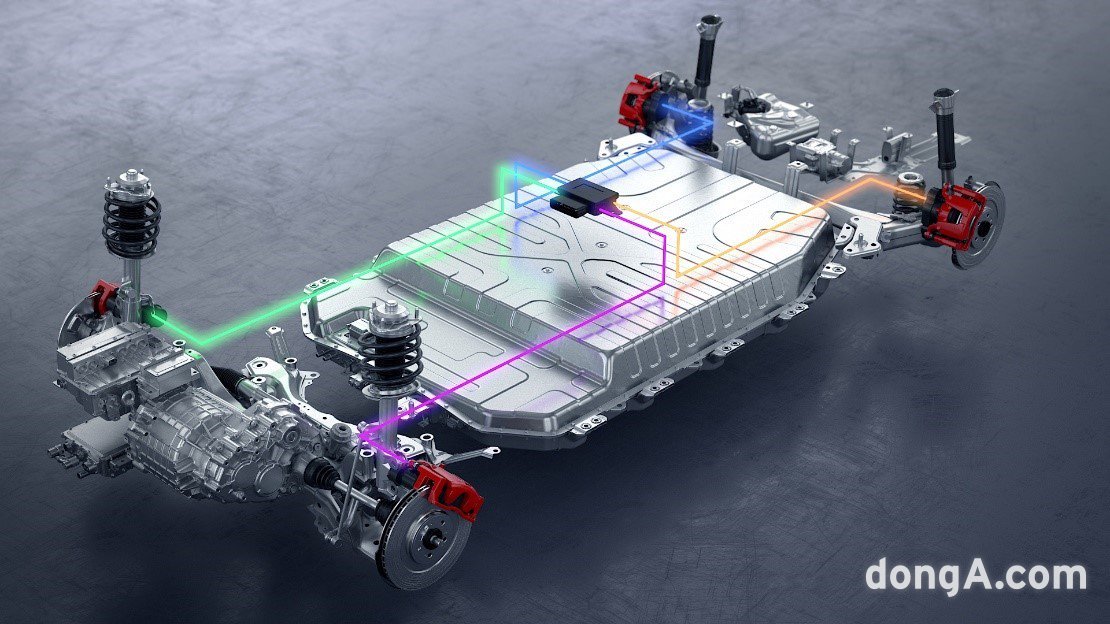
Brake-by-Wire system diagram. (EMB: Electro Mechanical Brake) EMB is a next-generation brake that removes the mechanical connection between the pedal and the braking system and converts a hydraulics-based braking system into a fully electronic braking system, with individual braking systems installed on each wheel. Source: HL Mando
Leading the “By-Wire” chassis market, a core technology in the SDV eraAs the global automotive industry transitions to a software-defined vehicle (SDV) architecture, HL Mando’s next-generation electronic chassis technologies are also demonstrating competitiveness. Representative technologies include Steer-by-Wire (SbW), which controls steering solely through electrical signals by removing the mechanical steering column, and Brake-by-Wire (BbW), which electronically controls braking in the same way.
By-wire technology eliminates physical drive shafts in the vehicle, maximizing utilization of interior space and providing an essential foundation for responding precisely and rapidly to control commands from autonomous driving systems. It also facilitates the implementation of redundancy design that enables emergency control in the event of system failure. While major global chassis suppliers are struggling due to restructuring and delays in technology transition, HL Mando is simultaneously enhancing profitability and building technological entry barriers by proactively investing in R&D and continuously increasing the proportion of electronic products.
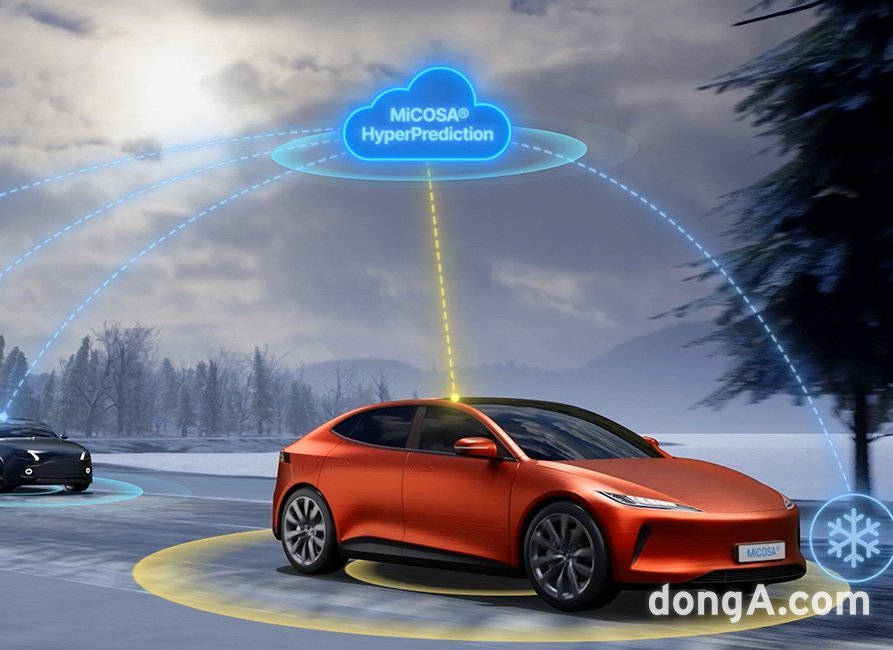
Connected hazard information sharing technology. Through cloud-based connectivity, vehicles can share hazard information with surrounding vehicles in real time, and, when necessary, provide guidance to nearby repair shops to support follow-up measures. Source: HL Mando
Diversifying global customers through expansion in North America, China, and IndiaReducing revenue reliance on specific automakers and diversifying the global supply chain are also key factors underpinning stable growth. Starting with expanding supplies to emerging electric vehicle manufacturers in North America, HL Mando has broadened its order base to Chinese local automaker brands and the rapidly growing Indian automotive market.
In particular, as the supply of high-performance electronic components installed in electric and autonomous vehicles increases, the qualitative profile of the company’s global order backlog has improved. The company is receiving recognition for having built a portfolio that minimizes the impact of production fluctuations at specific regions or automakers and can capture global demand from the electrification transition.
Building an all-in-one future mobility and robotics supply chain through affiliate synergiesGroup-level collaboration among affiliates is also translating into concrete results. HL Mando is strengthening cooperation with HL Klemove, an affiliate specializing in autonomous driving solutions, and HL Robotics, a company specializing in logistics and parking robots.
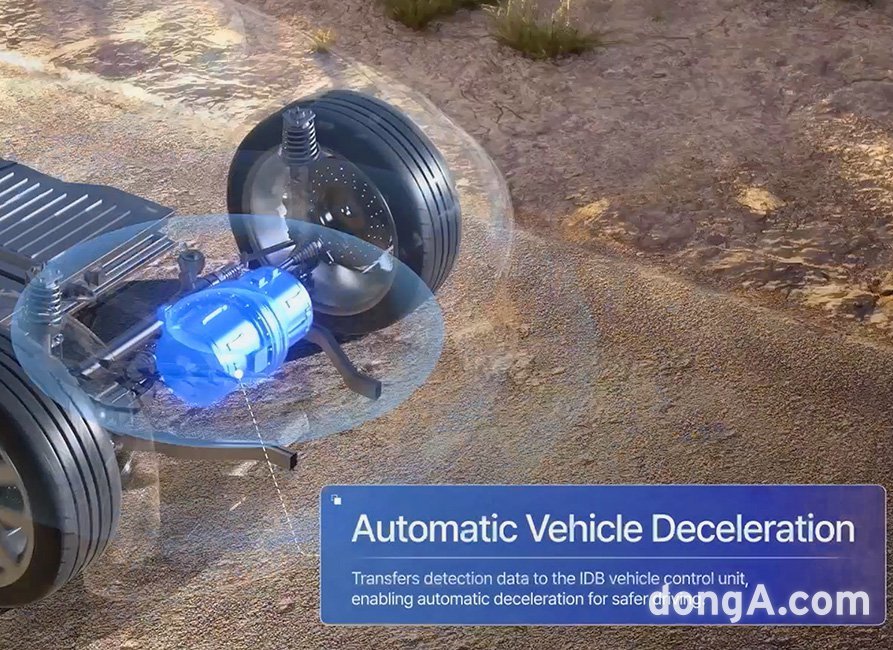
Active protection control technology. When tire damage, severe low pressure, or abnormal vibration is detected, the system automatically executes active protection measures beyond simple warnings, such as limiting vehicle speed, stabilizing driving, and inducing emergency stops. Source: HL Mando
By combining HL Klemove’s sensors—such as radar and cameras—and autonomous driving perception and decision-making algorithms with HL Mando’s braking and steering hardware drive control technologies, the company is presenting integrated solutions for autonomous vehicles and robotaxis to automakers.
Industry experts assess that “HL Mando has enhanced its proven chassis control technologies to respond in a timely manner to the industrial shift toward SDVs, while securing a clearly defined new growth engine in robot components.” Securities analysts also project a positive outlook, stating that “through diversification of its global customer base and the creation of synergies among affiliates, HL Mando is solidifying its position as a key supplier in the future mobility and robotics industries.”
ⓒ dongA.com. All rights reserved. Reproduction, redistribution, or use for AI training prohibited.
Popular News









 About Dong-A Ilbo