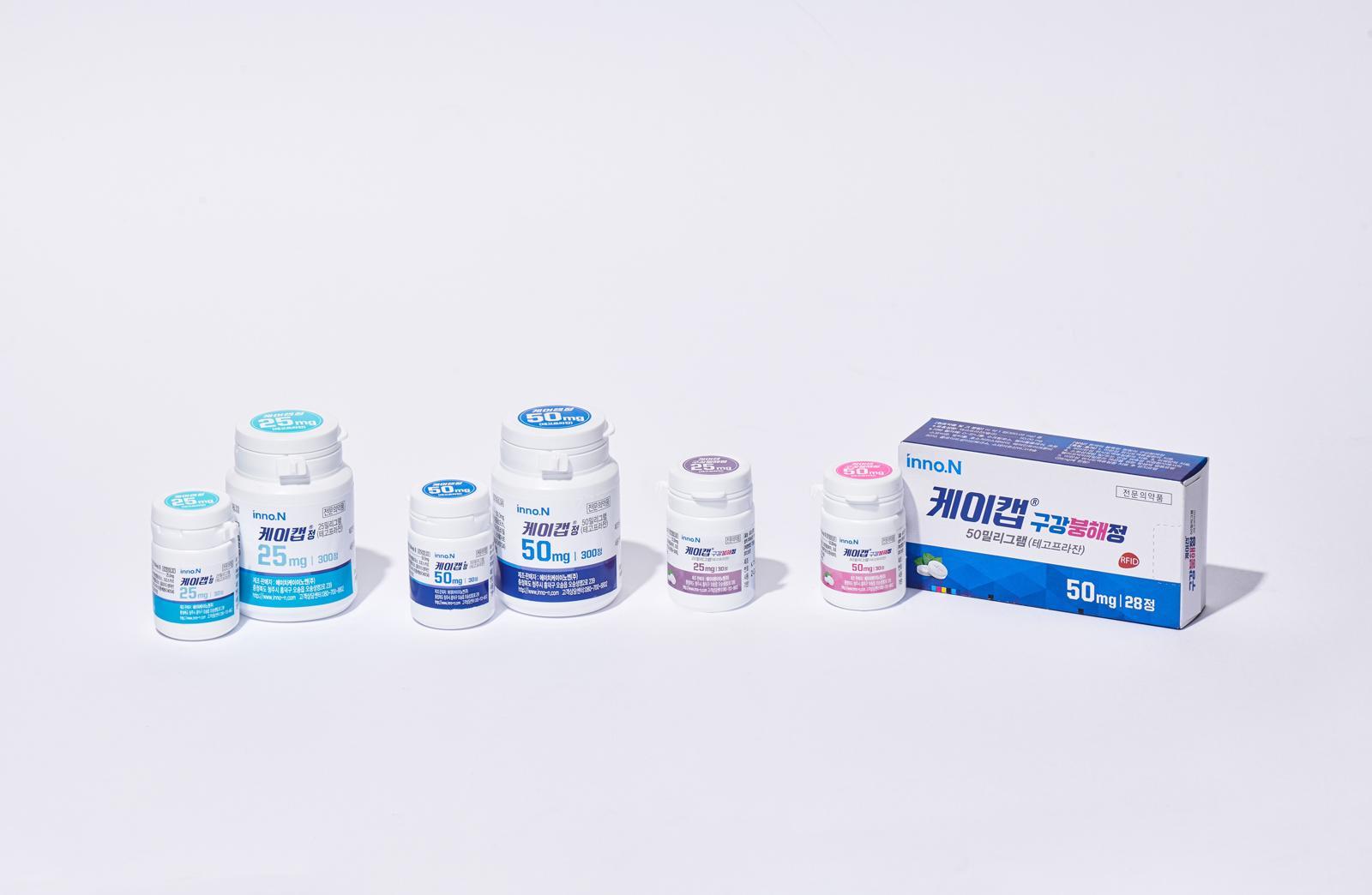
HK Inno.N’s gastroesophageal reflux disease new drug K‑CAB series. Provided by HK Inno.N
HK Inno.N announced on the 27th that its new drug K-CAB tablet (ingredient name: tegoprazan) for gastroesophageal reflux disease has received new approval for the indication of prevention of peptic ulcers associated with administration of nonsteroidal anti-inflammatory drugs (NSAIDs).
With this approval, K-CAB now has a total of six indications. In addition to its existing indications for the treatment of erosive and non-erosive gastroesophageal reflux disease, treatment of gastric ulcers, combination therapy with antibiotics for the eradication of Helicobacter pylori, and maintenance therapy after treatment of erosive gastroesophageal reflux disease, its prescription scope has now been expanded to include prevention of gastric and duodenal ulcers associated with NSAIDs administration.
NSAIDs are used for the treatment of arthritis and chronic pain, but long-term administration can cause ulcers in the stomach and duodenum. With the newly added indication, K-CAB can now be used in combination prescriptions to prevent gastrointestinal adverse effects in patients taking anti-inflammatory analgesics for an extended period.
According to HK Inno.N, the clinical trial for approval was conducted in patients on long-term NSAIDs therapy. The study compared the efficacy and safety of K-CAB tablet 25 mg with lansoprazole 15 mg, a proton pump inhibitor (PPI), in preventing gastric and duodenal ulcers.
Clinical results showed that, after 24 weeks, the K-CAB treatment group demonstrated non-inferiority to the lansoprazole treatment group in terms of the incidence of gastric and duodenal ulcers. At 12 weeks, the proportion of patients without heartburn symptoms was statistically significantly higher in the K-CAB group than in the lansoprazole group.
The trial used a total of 11 NSAIDs, including eight non-selective NSAIDs such as pelubiprofen, naproxen and meloxicam, and three COX-2 selective inhibitors including celecoxib. HK Inno.N stated that 24 weeks of combination administration confirmed the potential and safety of using K-CAB together with various anti-inflammatory analgesics.
With this expanded indication, K-CAB’s prescription range is also expected to grow in the NSAIDs combination therapy market, where PPI-class treatments have been predominantly used. The company analyses that demand for gastrointestinal protective therapy is rising alongside an increase in long-term NSAIDs users due to population aging and a growing number of chronic pain patients.
Kwack Dal-won, CEO of HK Inno.N, said, “Management of gastrointestinal adverse effects associated with long-term use of anti-inflammatory analgesics is an area of unmet need worldwide,” adding, “Based on the clinical data obtained this time, we will expand K-CAB’s therapeutic scope in domestic and overseas markets.”
K-CAB was launched in Korea in March 2019. In April this year, it reportedly became the first domestically developed single-agent new drug to exceed KRW 1 trillion in cumulative outpatient prescription sales.
HK Inno.N has currently signed technology export or finished product export contracts with 55 overseas countries, and K-CAB is being sold in 20 countries including Korea, China and countries in Latin America. In the United States, local partner Sebela submitted a new drug application (NDA) to the Food and Drug Administration (FDA) in January this year.
ⓒ dongA.com. All rights reserved. Reproduction, redistribution, or use for AI training prohibited.
Popular News








 About Dong-A Ilbo