K-Zone revolutionizes the disposition of returns and long-term inventory
Connecting inventory sellers and buyers in one step… Cutting processing costs and time with autonomous AI
From selling on Amazon to suffering from returns… Turned sellers’ “incurable disease” into a business
Launching in the U.S. and expanding globally… “We’ll evolve into a wholesale trading platform”
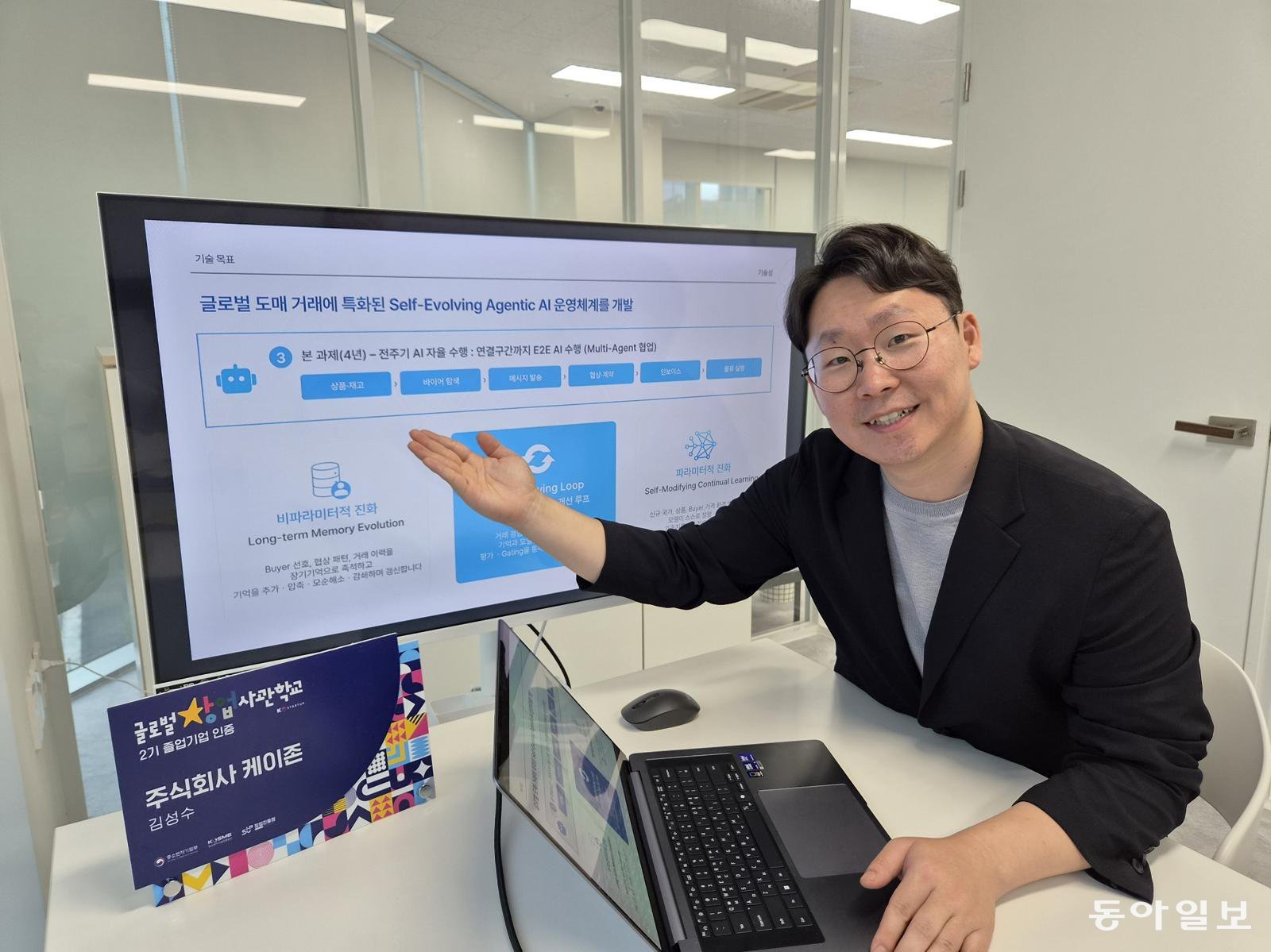
On 14 July, K-Zone CEO Kim Sung-soo explains future development plans for an autonomous AI specialized in global wholesale transactions at the company’s headquarters near Pangyo Station in Seongnam, Gyeonggi Province. Using its in-house autonomous AI system, which is about half complete, K-Zone is simultaneously running a business that sells returned and long-term inventory and a business that leases its autonomous AI system on a subscription basis.
A massive global online shopping market has a largely unseen headache: returned goods from order cancellations and long-term inventory (also known as dead stock) that ultimately fails to sell. While countless companies struggle with how to dispose of such surplus inventory, one young entrepreneur has identified a gold mine in this space. That is 33-year-old CEO Kim Sung-soo, who leads K-Zone, founded in 2020. The company uses autonomous artificial intelligence (Agentic AI) to efficiently sell returned and long-term inventory by finding suitable buyers, a process that previously relied on manual work or simple IT systems. In an interview at K-Zone’s office in Pangyo-dong, Seongnam, on 14 July, Kim stated, “We are executing a plan to fully automate not only returns and dead stock but the entire global wholesale trading process with autonomous AI by 2028.”
● The vast world of returns and inventory
In the global trade ecosystem, the scale of returns and long-term inventory is beyond imagination. Kim noted, “In the United States alone, annual returns amount to KRW 1,450 trillion at retail prices.” K-Zone has secured resale volume by registering as one of the 25 official partners handling returns for Amazon, the world’s largest e-commerce platform. In addition to Amazon, it sources goods from major retailers such as Walmart and Target, manufacturers whose warehouses are overflowing due to failed demand forecasts, and third-party logistics warehouse operators struggling with inventory disposal. Product conditions vary widely, from new items with only the packaging opened, to slightly damaged goods, to inventory nearing its expiration date.
The huge volume of accumulated inventory is then sold by the container load to wholesale buyers around the world seeking low purchase prices. This is not a sector newly pioneered by K-Zone; the so-called “clearance” business has a long history. K-Zone’s differentiator is that it is overhauling the operating methods of this vast, traditional, and aging industry — which has long relied on phone calls, emails, and manual ledgers — with cutting-edge AI technology.
● ‘REMEX’ for managing and matching buyers
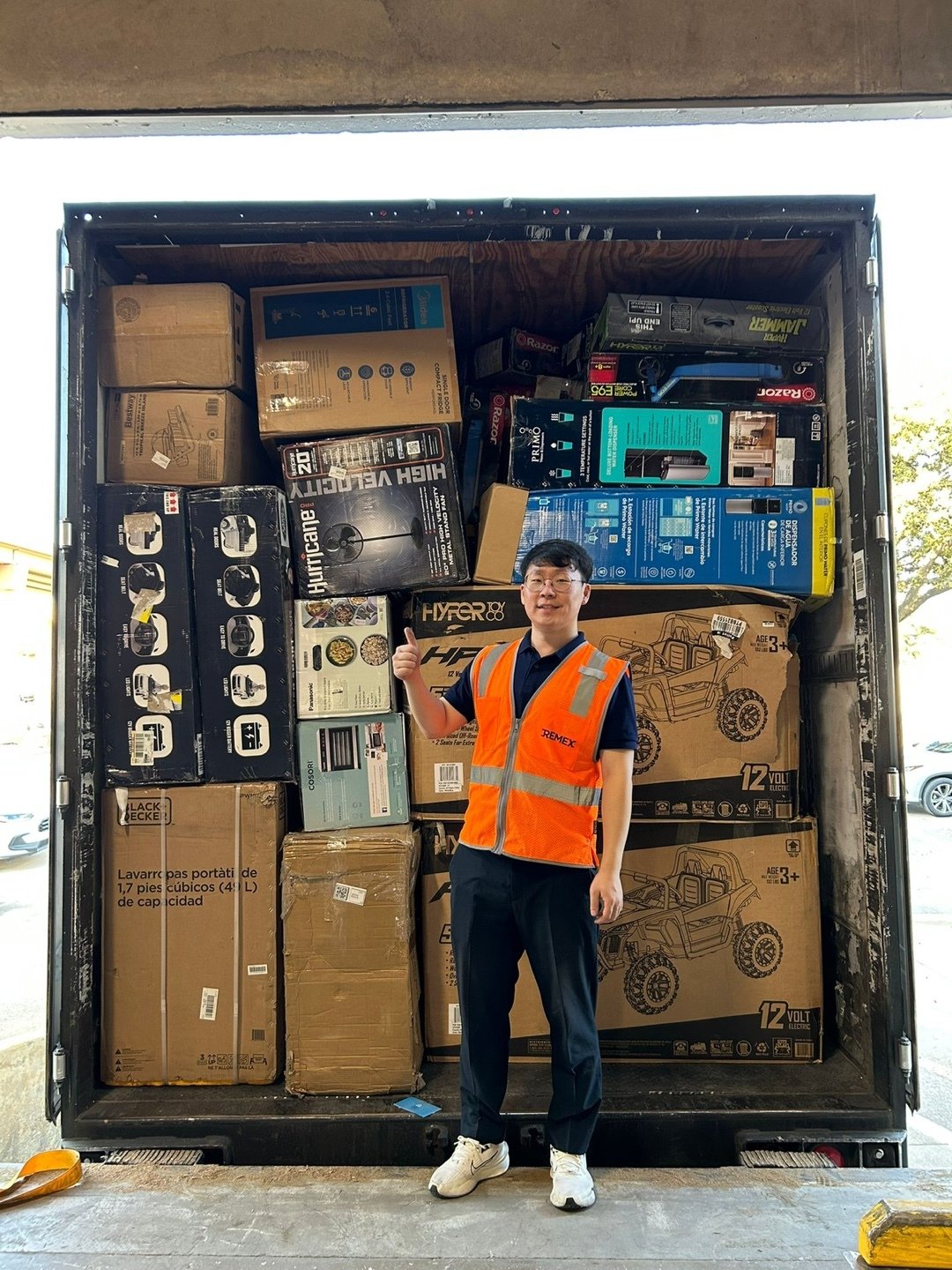
A commemorative photo taken in front of a container being exported to Costa Rica from K-Zone’s warehouse in Texas, USA, in 2025. Provided by K-Zone.
Countless products that were on the verge of being discarded are sold to buyers across the globe at prices around one-tenth of the original tag. For example, a premium beauty set worth USD 100 or a returned vacuum cleaner that had been sitting in an Amazon warehouse can be shipped for just USD 10 to a large variety store in Costa Rica or discount outlets in Panama and Guatemala. Dead stock that was a burden to some becomes highly attractive merchandise for outlet retailers in Latin America and Eastern Europe who cannot stock enough of it.
In the traditional market, however, companies holding inventory face difficulties in searching for buyers and lack the capacity to engage in repeated negotiations and communications. In the meantime, there is also the risk that the value of the inventory will decline. On the other side, buyers have struggled to find inventory that matches their desired price, quantity, and payment terms, and it has been hard to assess whether a seller is trustworthy. The transaction failure rate reached as high as 95%.
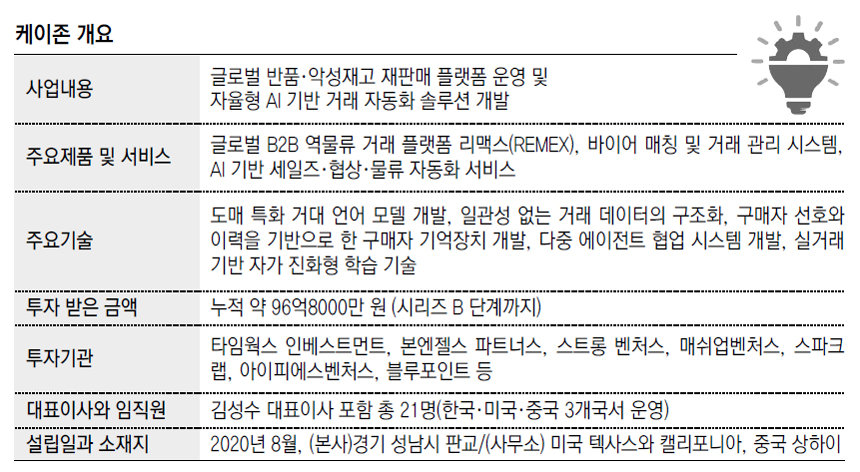
K-Zone’s global resale automation platform, REMEX, structures massive, inconsistent data on returns and inventory and automatically matches it with optimal buyers scattered across the world. Currently, around 8,500 buyer companies are registered on the platform.
The AI within REMEX analyzes buyers’ transaction histories and preferences to connect them optimally based on the product categories, regions, and minimum order quantities they are most likely to want. In routine periods, it holds conversations with buyers, such as checking in on them to build rapport, and collects information on their specific situations and needs. The platform has shortened the lead time from as long as four weeks with the traditional method to 11 days. K-Zone successfully resold 23 million items in the United States alone through last year.
To achieve this, K-Zone has built and is utilizing a “large language model specialized in wholesale transactions.” Going forward, the company plans to fully automate transactions by enabling autonomous AI to directly negotiate prices with buyers and even complete logistics dispatch without human intervention. K-Zone has also begun monetizing this autonomous AI solution by offering it as an Agent-as-a-Service (AaaS) on a subscription basis, charging a monthly fee of USD 129. Currently, 31 companies in the United States, Canada, Dubai, Poland, Panama, and other locations are using the service.
From May 2023 through April this year, over a full three-year period, K-Zone recorded cumulative revenue of about KRW 23 billion. Last year, it successfully turned profitable with a net profit of KRW 140 million.
● Three setbacks and a determined move to the US
After majoring in international trade at Liberty University in Virginia, USA, Kim began his entrepreneurial journey in a corner of his parents’ office in his hometown of Cheongju, North Chungcheong Province. He has three prior business experiences, including running a street photo service at festivals with a Polaroid camera. He grew gradually through processes that were neither clear successes nor outright failures. The business model for K-Zone, his fourth venture, emerged from his own experience as a seller on Amazon in the United States.
Kim exported various products such as window blinds and bidets through Amazon in the United States. In the US market, where houses have many windows of different sizes, blinds — which customers tend to purchase in significant quantities per order — were a fairly lucrative item. However, there were many cases where products were returned because they did not fit when installed. As the blinds were custom-made, returns were a disaster. Bidets also had serious return issues: once a water hose had been connected even once, the product could no longer be resold. Perfectly functional products that had been shipped to the US at high freight costs were discarded without recourse, repeatedly eroding all of the company’s profit in a nerve-racking cycle.
Driven to the brink, Kim set out in search of solutions by visiting other global sellers in the United States and Korea without prior appointments. To his surprise, he found that every seller he met — though dealing in different product categories — was suffering just as severely from returns and dead stock. Even large corporations had no dedicated departments or staff to handle overseas return inventory and were simply leaving goods in warehouses. Convinced that the painful problem he had experienced was a widespread, chronic disease afflicting sellers worldwide, he immediately packed his bags and moved to Texas, a hub for third-party logistics warehouses in the US. There, he rented a warehouse and, by tirelessly canvassing local wholesalers, launched a full-fledged inventory disposal business.
● “Will evolve into a global wholesale trading platform”
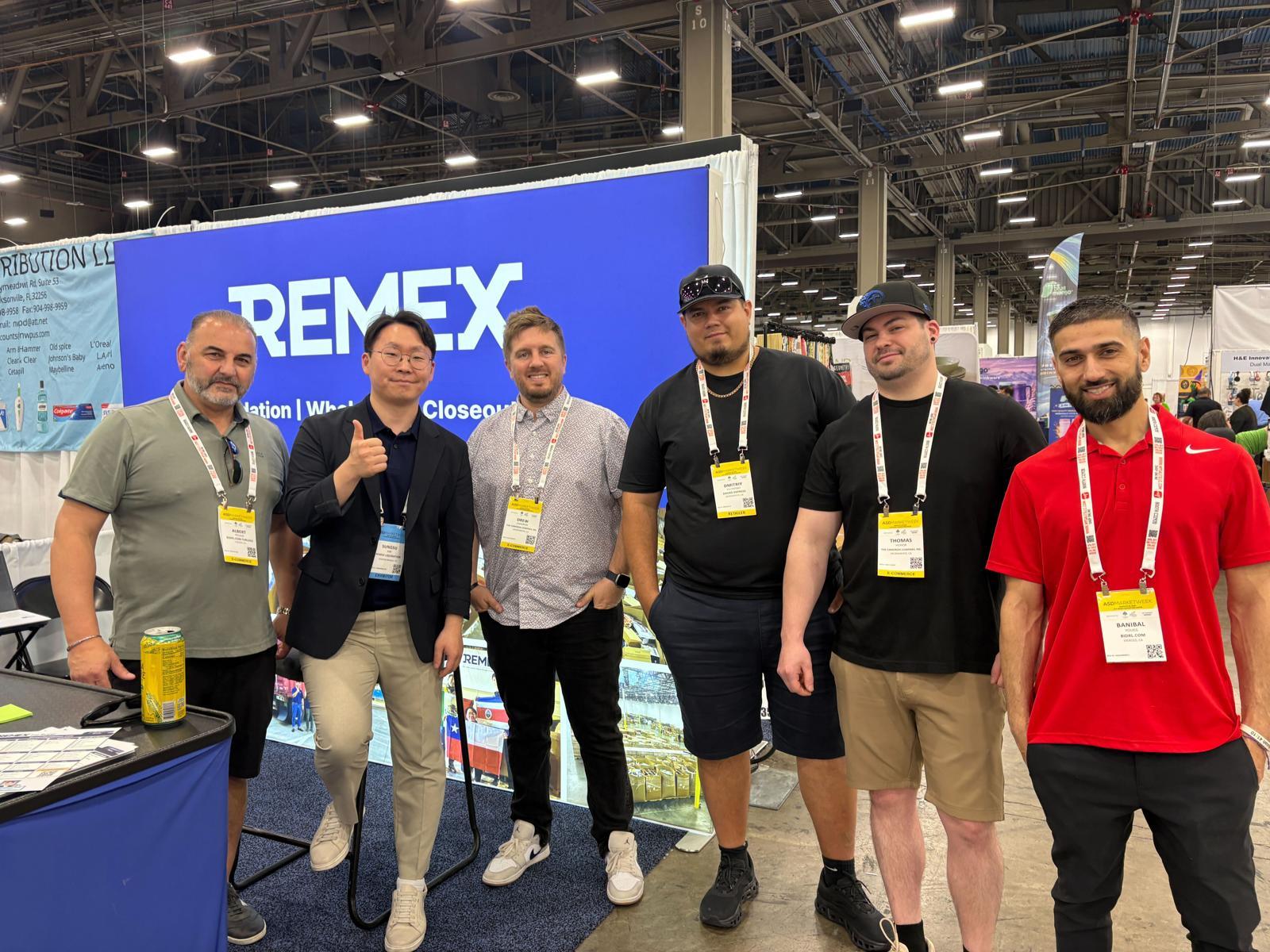
In March this year, K-Zone participated in ASD Market Week, the largest consumer goods wholesale trade show in the United States, held at the Las Vegas Convention Center in Nevada. CEO Kim poses for a photo with buyers at the booth promoting REMEX. Provided by K-Zone.
Kim is based in the United States, directly overseeing the challenging local sales and business development activities. He returns to K-Zone’s Korean headquarters only about once a month, for extremely brief three- to four-day visits, during which he works around the clock to oversee the entire business. At headquarters, technology development specialists are leading the platform development. “We are targeting a serviceable available market (SAM) of about KRW 1,700 trillion by combining the global returns and inventory market with the business-to-business (B2B) wholesale trading market,” Kim said.
There are also significant risks ahead. The conservative nature of traditional global wholesalers, who prioritize face-to-face transactions and close human relationships, could pose an entry barrier to the adoption of AI automation. There is also the risk that a single critical hallucination or malfunction by autonomous AI during price negotiations for large container-size deals could lead directly to enormous losses. K-Zone expects to be able to conduct proof-of-concept tests of the automation process around 2027–2028. To secure more robust technological capabilities, it plans to significantly reinforce its AI specialist workforce this year. “There will be challenges, but once transaction automation is achieved in this field, it can be applied to all global transactions,” Kim said, adding, “K-Zone will grow into a global platform for B2B wholesale transactions.”
ⓒ dongA.com. All rights reserved. Reproduction, redistribution, or use for AI training prohibited.
Popular News








 About Dong-A Ilbo