[Foreign Affairs & Security]
Jacob Helberg, U.S. Under Secretary of State for Economic Growth, Energy, and the Environment
“Korea is a core (U.S.) partner that is working hard to diversify and stabilize supply chains.”
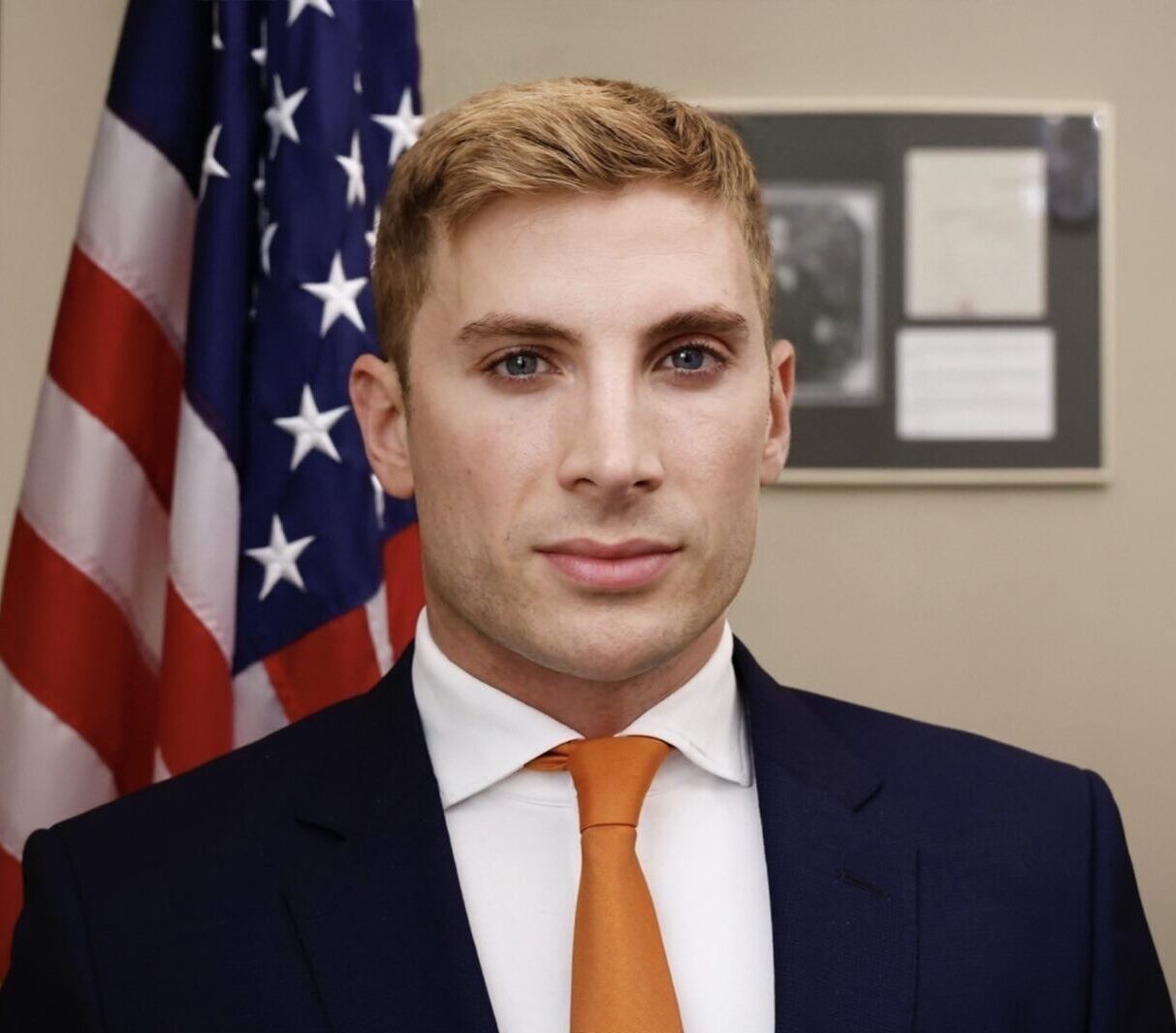
U.S. Under Secretary of State for Economic Growth, Energy, and the Environment Jacob Helberg (photo) stated in a written interview with the Dong-A Ilbo that the United States “is working to strengthen the ‘trilateral U.S.-ROK-Japan early warning system’ initiative to prevent the collapse of supply chains for key strategic items such as semiconductors, critical minerals, and battery materials,” emphasizing this point. The U.S.-ROK-Japan trilateral early warning system is a cooperation framework under which the three countries share in real time signs of abnormalities in supply chains for strategic items related to advanced technologies such as semiconductors and critical minerals, and respond preemptively when problems such as supply disruptions arise.
Helberg added, “The United States will continue to take steps to derisk and diversify supply chains in order to strengthen economic security.” This is interpreted as an intent to reduce dependence on supply chains concentrated in China and to build stable supply chains centered on allies and partner countries such as Korea. Having served as a senior adviser at software company Palantir Technologies, he is regarded as a key aide in the second Donald Trump administration who is leading efforts to counter China and restructure supply chains in strategic technology fields such as artificial intelligence (AI), semiconductors, and critical minerals. In particular, he is also known to have led the “Pax Silica” alliance, which brought together key allies including Korea to ensure stable supplies of silicon—an essential material in advanced technology fields—and to prepare for competition with China.
Helberg stressed, “President Trump and President Lee Jae-myung jointly pledged to stabilize and diversify critical mineral supply chains through public-private cooperation in mineral mining and refining,” adding, “This also includes prioritizing critical mineral projects in the KRW 350 trillion ‘U.S.-ROK Strategic Investment Fund’ of USD 350 billion.” This suggests that critical minerals are also likely to be an important consideration in the investment in the United States agreed between the U.S. and Korean leaders last year. He also said, “Once the investment agreement with the United States is implemented, Korea’s purchases of U.S. energy resources will increase substantially.”
He further raised the issue of trade barriers in the Korean market, saying, “U.S. companies must be able to enter and operate in the Korean market without feeling that they are being unfairly treated or discriminated against.” In particular, he singled out “digital regulation” as a problem, saying, “Protectionist and anti-competitive measures in the digital sector undermine trust in Korea as a fair and predictable investment destination.”
Meanwhile, the Ministry of Foreign Affairs announced on the 25th that Second Vice Foreign Minister Kim Jin-ah, who visited the United States, met with Under Secretary Helberg on the 24th and shared the view on the importance of cooperation among reliable partners to stabilize supply chains in cutting-edge industrial sectors such as AI and digital technology. The U.S. and Korean vice ministers also discussed ways to strengthen capabilities in advanced manufacturing through mechanisms such as the Pax Silica Summit. Kim is also reported to have outlined implementation efforts to promote strategic investment projects in the United States, including the enforcement of the U.S.-ROK Strategic Investment Special Act and the launch of the U.S.-ROK Strategic Investment Corporation.
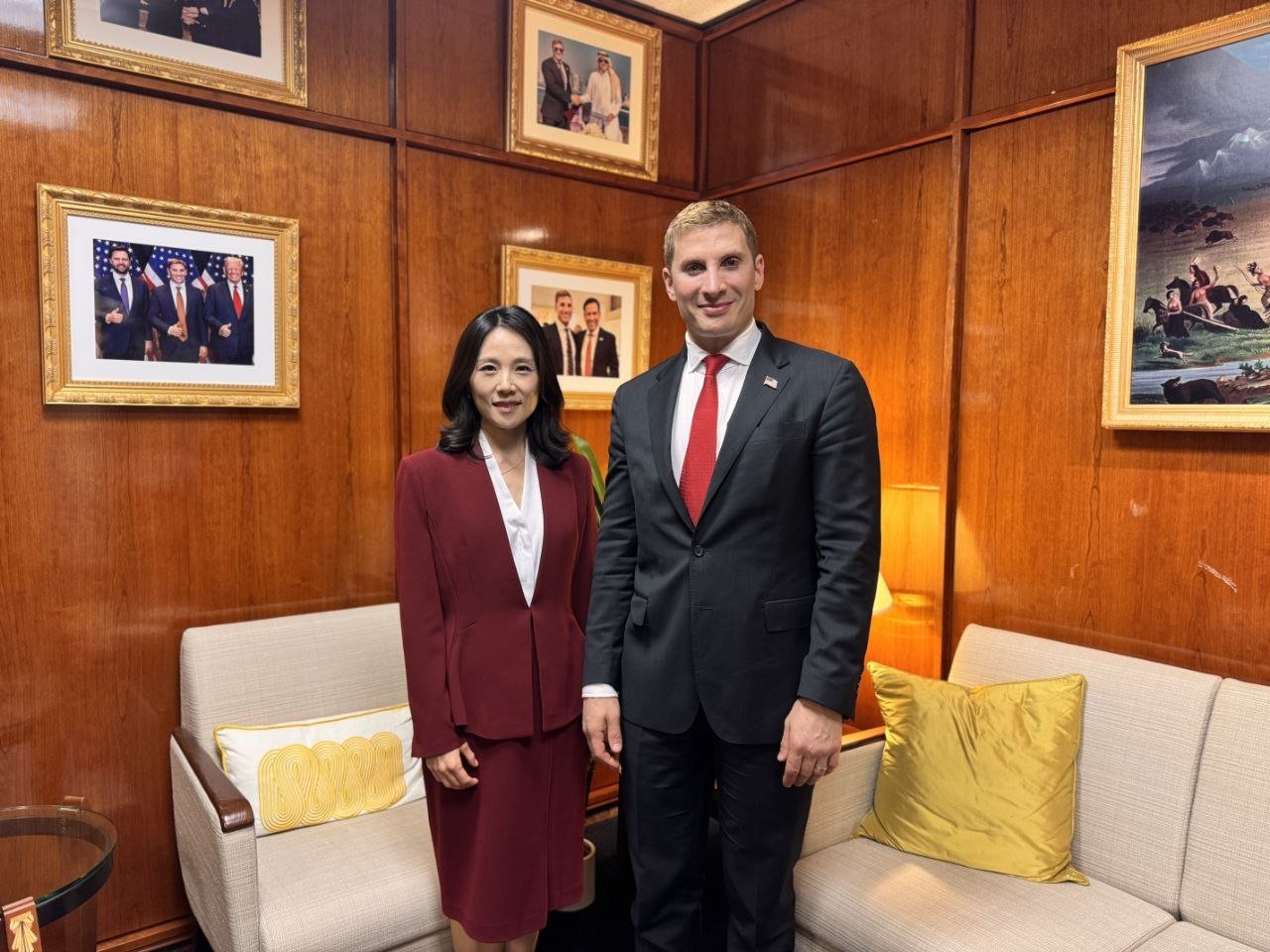
Second Vice Foreign Minister Kim Jin-ah meets with U.S. Under Secretary of State for Economic Growth, Energy, and the Environment Jacob Helberg in Washington, D.C., on the 24th (local time) to exchange views on stabilizing AI supply chains and U.S.-ROK economic cooperation. 2026.06.25 (Provided by the Ministry of Foreign Affairs)
The following is a Q&A with Under Secretary Helberg.
―What role does the United States expect Korea to play in U.S.-led economic security and supply chain cooperation? “Korea is a core (U.S.) partner in the effort to diversify and stabilize supply chains. ‘Economic security’ is strongly emphasized in our future-oriented agenda with Korea, which aims to preserve our collective industrial competitiveness and maintain secure supply chains. This includes cooperation through the Forum on Resource Geostrategic Engagement (FORGE), in which Korea serves as chair.
Korea also joined the United States and eight other countries last December as a founding signatory of ‘Pax Silica.’ We continue to work with Korea and Japan to enhance efforts to secure critical inputs, including through the trilateral U.S.-ROK-Japan early warning system initiative to prevent the collapse of key supply chains.
During President Donald Trump’s historic state visit to Gyeongju last October, he concluded groundbreaking contracts worth billions of dollars. Notably, these included a joint venture between ReElement Technologies, which focuses on high-value mobility magnets, and POSCO International. Through this, we will establish a complex in the United States for vertically integrated rare earth separation, refining, and magnet production. President Trump and President Lee Jae-myung jointly pledged to stabilize and diversify critical mineral supply chains through public-private cooperation in mining and refining. Prioritizing critical mineral projects under the USD 350 billion U.S.-ROK Strategic Investment Fund is part of this. The efforts of the two leaders are already facilitating private sector-led cooperation in which Korean companies invest in the U.S. critical mineral refining sector. In December last year, Korea Zinc reached agreement with the U.S. government and investors to build a USD 7.4 billion smelter in Clarksville, Tennessee. This will be the first new zinc smelter to be built in the United States in decades.”
―In Korea, there are expectations that these U.S.-led global initiatives will help stabilize supply chains, but also concern about possible trade retaliation from China. What is your view? “We are using diplomatic and economic tools to promote fair and transparent markets that work for everyone. The United States will continue to take steps to derisk and diversify supply chains in order to strengthen economic security. We will work closely with allies and partners worldwide to build independent supply chains that ensure economic prosperity for all countries that trade responsibly. U.S. Vice President J.D. Vance proposed the creation of a ‘preferential trade zone’ for critical minerals in his speech at the ministerial meeting on critical minerals. This is about reinforcing mutually beneficial trade with trusted partners. That is the logic underpinning much of the work we are pursuing.”
―How does the United States define “economic security,” which is a core pillar of its foreign policy? “‘Economic security is national security’ is a concept that President Trump has championed. It is also a guiding principle for the State Department’s work. The United States has advanced a peace agenda that seeks to end conflicts and remove economic volatility from the system. When the world is unstable and wars intensify, raw material prices rise and trade routes are disrupted. Such volatility becomes an enormous ‘tax’ on the global economy. By launching FORGE and Pax Silica, we have created platforms to build secure supply chains with like-minded partners. We are developing a new economic security compact among allies and trusted partners.”
―How does the Trump administration evaluate the pace of Korea’s implementation of its investment commitments in the United States? “On July 30 last year, President Trump announced a comprehensive and complete trade agreement with Korea. Once this agreement is implemented, Korean investment in the industries of America’s future will expand, and Korea’s purchases of U.S. energy resources will increase substantially. Access for U.S. exports to the Korean market will also be further enhanced. In recent years, Korea has been one of the largest investors in the United States. Now Korea has pledged an additional USD 350 billion in government-led investment and USD 150 billion in private-sector-led investment, doubling the scale. These investments support President Trump’s efforts to revitalize U.S. manufacturing, including in semiconductors, shipbuilding, and batteries. We want these investments to flow in as quickly as possible.
However, for far too long we have been hearing from U.S. exporters and industries about the barriers they face in the Korean market. U.S. companies must be able to enter and operate in the Korean market without feeling that they are being unfairly treated or discriminated against.”
―According to the U.S.-ROK Joint Fact Sheet (JFS) announced last year, the two governments agreed to support expanded cooperation in nuclear power and strategic industrial capabilities. What is your perspective? “Both the United States and Korea recognize that nuclear power is a critical and reliable source of electricity and an important component of efforts to expand U.S. energy supply. We also fully understand that it is essential to strengthening global energy security. Our two countries are committed to engaging in civil nuclear cooperation in a manner consistent with our legal requirements, the highest nonproliferation standards, and the spirit of discussions between our leaders. Under the agreement, we are consulting with the Korean side to determine the next steps in the process for the United States to provide its consent for Korea to enrich and reprocess U.S.-obligated material for peaceful purposes.”
―What is the U.S. position on Korea’s digital regulations? How does the United States view the recent controversy surrounding Coupang in Korea? “U.S. companies are the largest source of foreign direct investment (FDI) in Korea, recording investments of nearly USD 10 billion in 2025 alone. They play a decisive role in helping Korea realize its economic ambitions, particularly in critical and emerging technology sectors.
The United States expects the Korean government, in line with the joint vision of our leaders and the commitments agreed last November, to respect our commercial interests and foster a fair economic relationship based on reciprocity. Protectionist and anti-competitive measures, including in the digital sector, undermine trust in Korea as a fair and predictable investment destination.”
―What is your personal impression of Korea? If you have any particular ties to the country, please share them. “My confirmation as under secretary and my joining the State Department coincided with President Trump’s state visit to Gyeongju last October. I was honored to participate in APEC Leaders’ Week alongside the President, the Secretary of State, and other Cabinet officials. During my stay in Korea, our two leaders agreed to a ‘once-in-a-generation upgrade’ to the U.S.-ROK alliance. This reflects not only our long-shared interests, but also a renewed determination to build a safer and more prosperous future for both our peoples.
This results-oriented, future-focused framework is about rebuilding and expanding key industries. It also reflects the recognition that the U.S.-ROK alliance is rooted in protecting and advancing our shared economic security just as much as it is in democratic principles and an ironclad combined defense posture. These are lessons I believed to be true even when I was in the private sector. They have motivated me to work closely with representatives of the Korean government and private sector on initiatives such as Pax Silica. The U.S.-ROK alliance is the linchpin of peace, security, and prosperity in Northeast Asia, the Indo-Pacific, and around the world. Our alliance proves that when we stand together, we not only become stronger but also more prosperous. This will continue to guide us as we write the next chapter in one of the closest and most enduring partnerships in the world.”
ⓒ dongA.com. All rights reserved. Reproduction, redistribution, or use for AI training prohibited.
Popular News








 About Dong-A Ilbo