The New York Times reported that the semiconductor boom, fueled by the AI boom, is spreading to Korea’s stock market, workplace culture, real estate, and even new buzzwords related to university admissions. Getty Images Bank
As the influence of Korea’s semiconductor industry grows in the era of artificial intelligence (AI), The New York Times (NYT) has focused on semiconductor-related neologisms and meme culture that are spreading in Korean society. It analyzed that the memory semiconductor boom is transforming not only the stock market but also workplace culture, real estate, and discourse on university admissions.
On the 11th (local time), the NYT reported, “Behind the global AI boom are computer chips, and behind one important kind of chip is South Korea.” It explained that memory semiconductors, which Korea has long exported, have emerged as essential components for scaling up AI systems. It also stated that these semiconductors are becoming the new face of the Korean economy.
The outlet reported that Korea’s semiconductor industry accounts for more than 60% of global memory chip production. As demand for memory semiconductors has grown, the domestic stock market has moved significantly. The NYT explained that the KOSPI has more than doubled over the past year. It also reported that some employees of semiconductor companies are in a position to receive six-figure bonuses in US dollars.
The semiconductor boom is also being reflected in online culture. The NYT viewed memes and neologisms in Korea as functioning like indicators that reveal the political and social mood. It cited “semiconductor fever” as one of the key words that describe the atmosphere in Korea in 2026.
Getty Images Bank
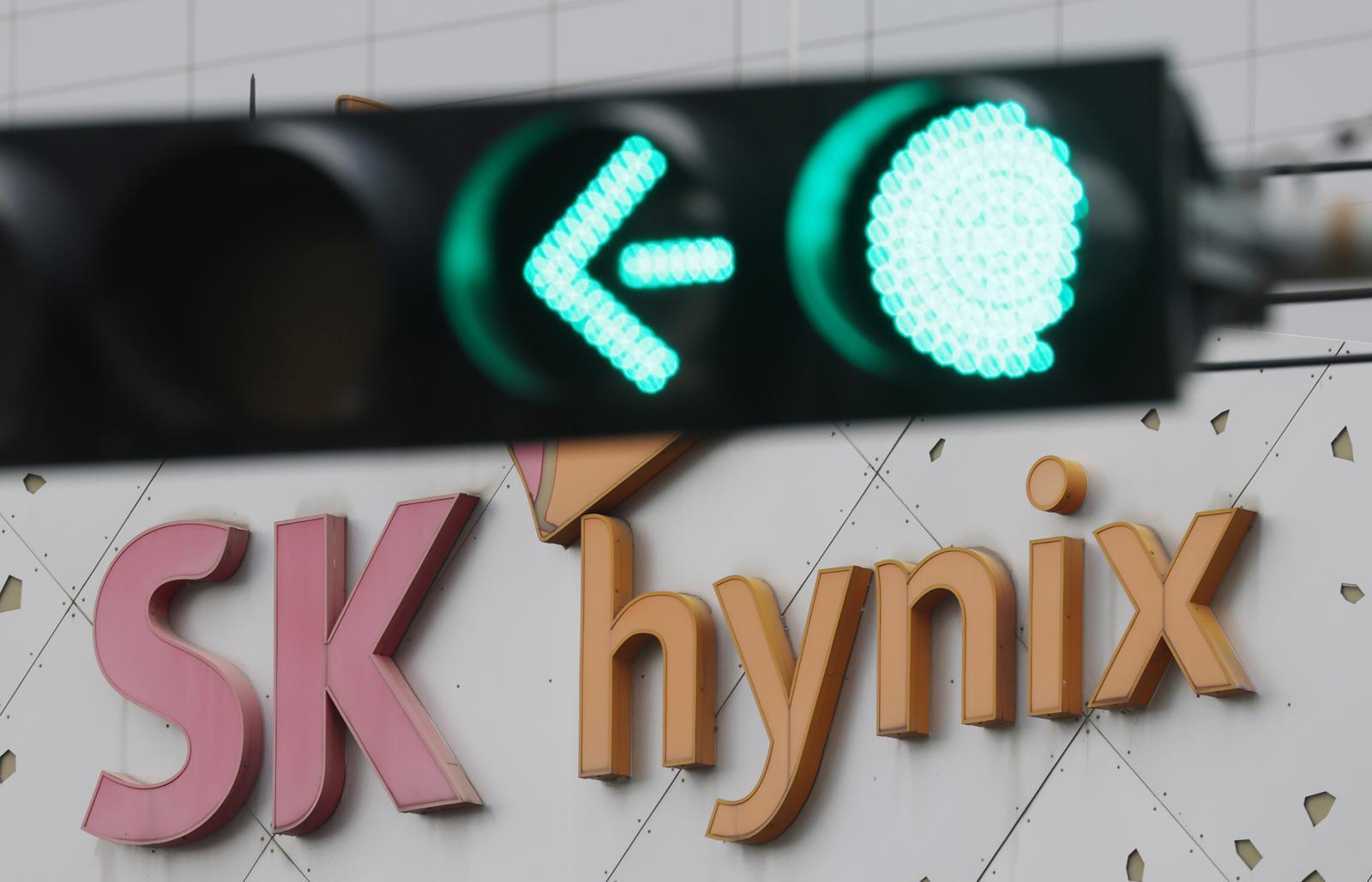
A representative expression introduced was “Samjeon Nix,” a portmanteau of Samsung Electronics and SK hynix. As the two companies have emerged as key stocks leading the domestic market, they are increasingly mentioned together among investors.
“Sam-men” and “Ha-men” were also highlighted. Each is a combination of Samsung Electronics and “amen,” and SK hynix and “amen,” respectively. The NYT explained that these expressions are used by retail investors who, like a prayer, invoke them in the hope of share price gains.
The NYT also introduced “silicon collar” as a term for employees of semiconductor companies. “Silicon collar” is derived from silicon, the key material used in semiconductor wafers. Like “white-collar” and “blue-collar,” it is used to refer to workers in the semiconductor industry. The implication is that semiconductor industry workers are now attracting attention as a new high-income occupational group.
Expressions used to describe the real estate market have also appeared. The NYT reported that a trend similar to Korea’s “station area” (yeokse-gwon), meaning apartments near subway stations, has emerged. Residential areas near shuttle bus stops for semiconductor companies (“shuttle-gwon”) are drawing new attention. The term reflects rising interest in locations that offer convenient commuting to semiconductor plants and research facilities.
Getty Images Bank
Change is also being detected in the education sector. The NYT introduced the phrase “Ha-ui-chi-han-yak-su” to describe preferred career paths among Korea’s top-tier students. It adds “Ha,” referring to SK hynix, in front of the existing “ui-chi-han-yak-su.” The phrase reflects a trend in which semiconductor contract departments are now mentioned as preferred paths alongside medical school, dental school, Korean medicine school, pharmacy school, and veterinary school.
The NYT assessed that although there has long been a strong preference for medical schools in Korean society, in the AI era the growth potential of the semiconductor industry and its high rewards are becoming new criteria for choice. It concluded that the semiconductor boom triggered by AI is changing not only the stock market but also the language and culture of Korean society more broadly, including workplace culture, real estate, and education.
ⓒ dongA.com. All rights reserved. Reproduction, redistribution, or use for AI training prohibited.
Popular News











 About Dong-A Ilbo