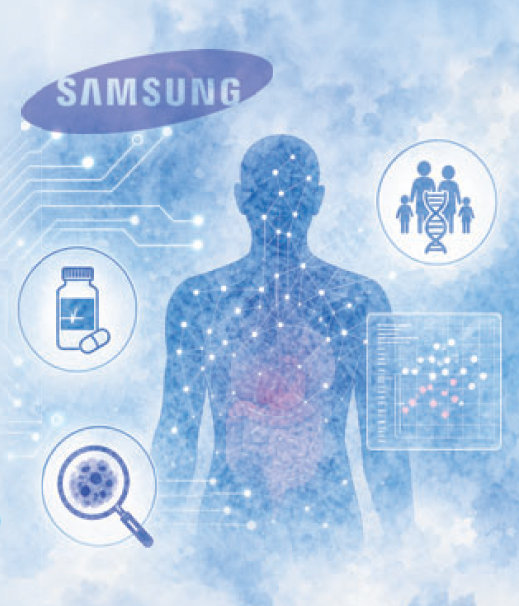
Samsung Electronics has become the largest shareholder of Element Biosciences (Element), a U.S. gene analysis equipment company. The move is part of an expansion of its “medtech (medical technology and devices)” business, which was identified as a future growth engine under the late Chairman Lee Kun-hee. Through this investment, Samsung is expected to combine its capabilities in collecting biometric data accumulated via smartphones and wearable devices with advanced gene analysis technologies.
● Samsung Electronics becomes largest shareholder of U.S. gene equipment firm
On the 10th, Samsung Electronics announced that it had made an additional investment of USD 175 million (approximately KRW 267 billion) in Element, which is headquartered in San Diego, California, thereby securing the position of largest shareholder. This follow-up measure comes 1 year and 11 months after its initial investment in July 2024. Although Element’s management control will remain with the existing founders after this investment, Samsung, as the largest shareholder, plans to pursue comprehensive technological collaboration.
Founded in 2017, Element holds technology capable of reading genes (DNA), the blueprint of living organisms, with 99.99% accuracy. It has drawn global attention particularly for its next-generation integrated analysis technology that can simultaneously observe not only DNA but also how cells in the body change over time with a single device. This goes beyond understanding the blueprint to tracking in real time how that blueprint actually operates inside the body. Such technology plays a critical role in precisely identifying the causes of intractable diseases such as cancer and in developing personalized therapies or new drugs tailored to individual patients.
Industry observers expect Samsung to accelerate the establishment of an “ultra-personalized healthcare ecosystem” in connection with its own hardware ecosystem. The approach involves combining daily biometric data collected by devices such as the Galaxy Watch and the smart ring “Galaxy Ring”—including sleep patterns, heart rate, and activity levels—with Element’s gene analysis technology. If this is linked to the mobile application “Samsung Health,” the mass adoption of personalized disease prediction services through smartphones becomes feasible. Some forecasts also suggest that, once combined with Samsung’s artificial intelligence (AI) algorithm capabilities for processing massive genomic datasets, the speed of disease interpretation could approach real-time levels.
● Samsung Electronics accelerates medtech investments
This investment aligns with Samsung Electronics’ mid- to long-term strategy to foster the medtech sector as a core future growth engine. Medtech is one of the “five new growth businesses” selected by the late Chairman Lee in 2010. Starting with the acquisition of medical device company Medison (now Samsung Medison) in 2011, Samsung has consistently continued investments and mergers and acquisitions (M&A) in related fields.
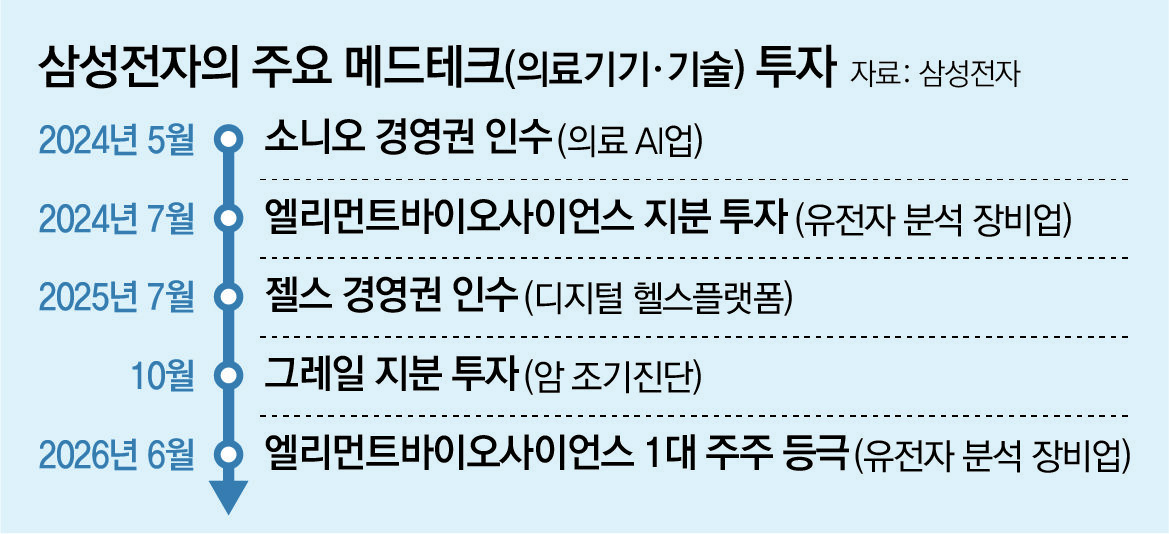
Samsung Electronics has accelerated its medtech investments over the past two to three years. In May 2024, it acquired French medical AI startup Sonio through its subsidiary Samsung Medison, and in July last year it purchased U.S. digital healthcare platform company Jell’s. In October of the same year, it jointly invested USD 110 million with Samsung C&T in U.S. cancer early-diagnosis company GRAIL.
Industry watchers anticipate that Samsung will apply medtech to its mobile devices and other products to enter the personalized precision medicine service business, offering end-to-end solutions from disease diagnosis and prevention to proposals for customized treatment methods. Roh Tae-moon, President and Head of the Device Experience (DX) Division at Samsung Electronics, said, “The combination of Samsung Electronics’ expertise in AI, medical devices, and digital health with Element’s innovative genomic analysis technology will create synergies in personalized medicine,” adding, “We will continue to invest across a wide spectrum from precision medical devices to digital health.”
ⓒ dongA.com. All rights reserved. Reproduction, redistribution, or use for AI training prohibited.
Popular News









 About Dong-A Ilbo