Sciwind unveils clinical data at American Diabetes Association
HK inno.N brings in “Ecnoglutide”… Phase 3 trial underway in Korea
Clinical trial shows 35% greater weight loss vs. Wegovy ingredient
“Selective signaling design minimizes side effects and maximizes efficacy”
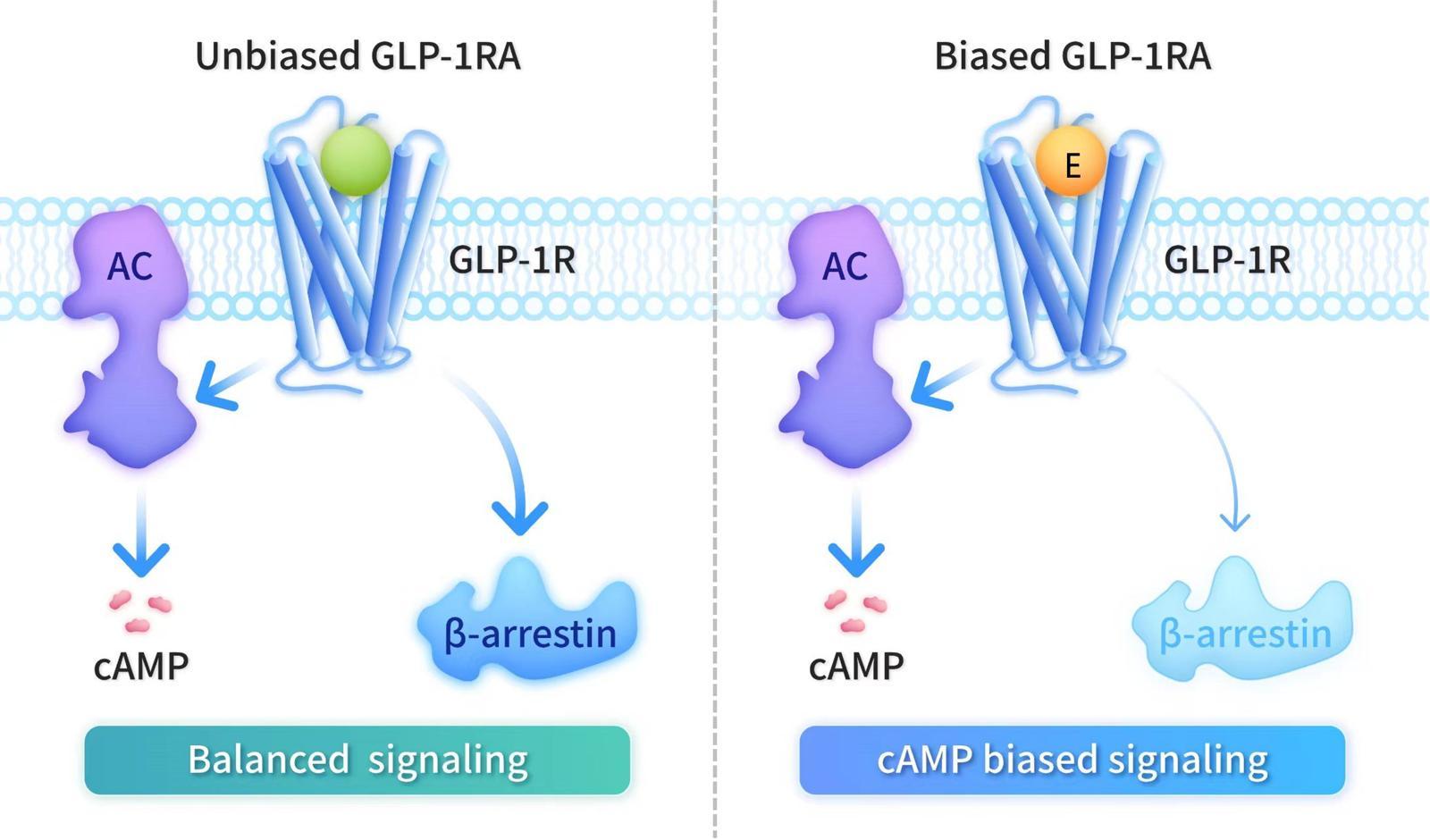
Conceptual diagram of the world’s first cyclic adenosine monophosphate (cyclic AMP, cAMP)-biased GLP-1 receptor agonist. By applying a selective signal transduction design (cAMP, right side of image), the drug is said to reduce side effects while enhancing weight loss. Provided by Sciwind Biosciences
HK inno.N announced on the 9th that clinical trial results from the United States showed its glucagon-like peptide-1 (GLP-1) class obesity and diabetes drug candidate, introduced in 2024 and currently in Phase 3 clinical trials in Korea, demonstrated superior weight loss efficacy compared with semaglutide (active ingredient of Novo Nordisk’s Wegovy and Ozempic).
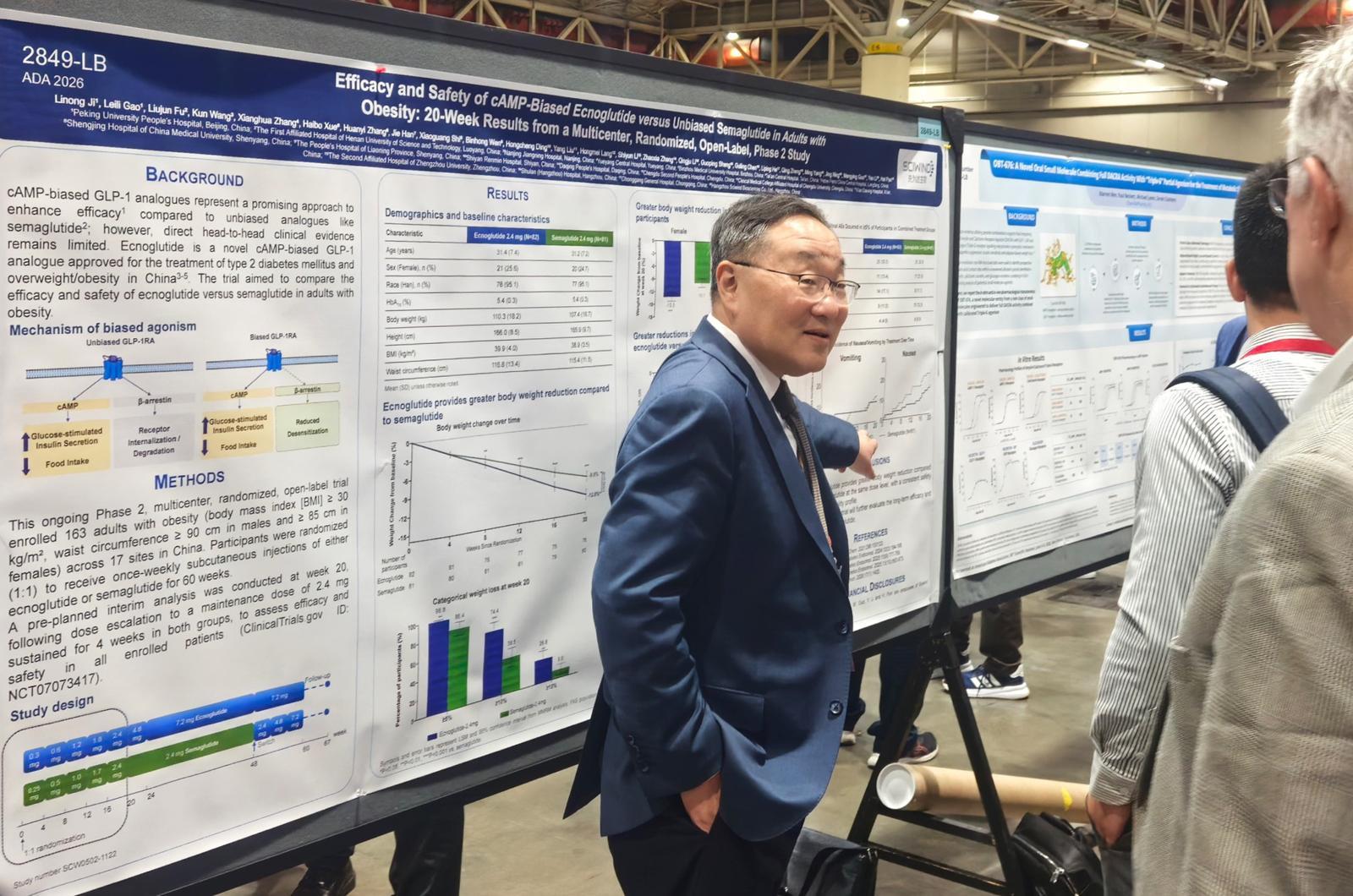
According to HK inno.N, its Chinese partner Sciwind Biosciences (hereinafter Sciwind) presented Phase 2 head-to-head clinical trial results comparing the GLP-1 class obesity treatment “Ecnoglutide” with semaglutide at the “2026 American Diabetes Association (ADA)” meeting held in New Orleans, United States, from May to 8 (local time).
Ecnoglutide, which HK inno.N in-licensed from Sciwind, is being developed as a once-weekly novel drug for the treatment of type 2 diabetes and obesity. In Korea, HK inno.N holds exclusive rights for development and commercialization. Commercialization rights in China are held by Pfizer. It is described as the world’s first cyclic AMP (cAMP)-biased GLP-1 receptor agonist, characterized by enhanced selectivity in signal transduction to secure both efficacy and safety. cAMP is the most representative “second messenger” substance that transmits signals within cells. When a primary messenger such as a drug or hormone binds to a cell surface receptor, cAMP receives that signal and relays it into the cell, acting as a messenger that instructs the cell to initiate an actual response.
The study conducted by Sciwind directly compared Ecnoglutide with semaglutide. It announced that this design confirmed the clinical superiority of Ecnoglutide in weight loss and key metabolic indicators. The trial was conducted at 17 research centers in China with 163 obese adult patients. Participants were randomly assigned at a 1:1 ratio to receive once-weekly subcutaneous injections of either Ecnoglutide or semaglutide, both at the same maintenance dose of 2.4 mg.
Presentation of Ecnoglutide clinical trial results at the 2026 American Diabetes Association. Provided by HK inno.N
35% higher weight loss than Wegovy and Ozempic
According to the study, Ecnoglutide showed a markedly greater weight loss effect than semaglutide at week 20 of treatment. The average percentage weight reduction was 35% higher than that of semaglutide, and the proportion of patients who lost at least 10% of their body weight was reported to be roughly double. The least-squares mean percentage change in body weight from baseline was -12.8% in the Ecnoglutide group and -9.5% in the semaglutide group (P〈0.0001), while the proportion of participants achieving at least 10% weight loss was 74% in the Ecnoglutide group and 40% in the semaglutide group (P〈0.001).
Ecnoglutide also demonstrated superior waist circumference reduction. At week 20, the mean decrease from baseline in the Ecnoglutide group was 10.5 cm, compared with 8.7 cm in the semaglutide group (P〈0.05), indicating a 20% greater reduction with Ecnoglutide. Other anthropometric measures, including arm and neck circumference, also showed improvements that significantly outperformed semaglutide.
Selective signal transduction design reduces side effects and enhances weight loss
The adverse event profile is also notable. Sciwind emphasized that Ecnoglutide showed superior gastrointestinal tolerability compared with existing GLP-1 class therapies. Unlike conventional treatments, which activate all pathways to transmit weight loss signals, Ecnoglutide is designed with cAMP bias to enhance selectivity in signal transduction, thereby maximizing efficacy while minimizing signals associated with side effects.
Professor Linong Ji of Peking University People’s Hospital, the principal investigator of the study, stated, “These results represent a case in which a biased GLP-1 agonist has demonstrated clinical superiority over existing therapies” and added, “It could set a new standard in the paradigm of obesity and metabolic disease treatment.”
HK inno.N CEO Kwak Dal-won said, “This presentation reconfirmed the potential and promise of Ecnoglutide,” adding, “The company will do its utmost in new drug development to offer a new treatment option to patients in Korea.”
ⓒ dongA.com. All rights reserved. Reproduction, redistribution, or use for AI training prohibited.
Popular News










 About Dong-A Ilbo