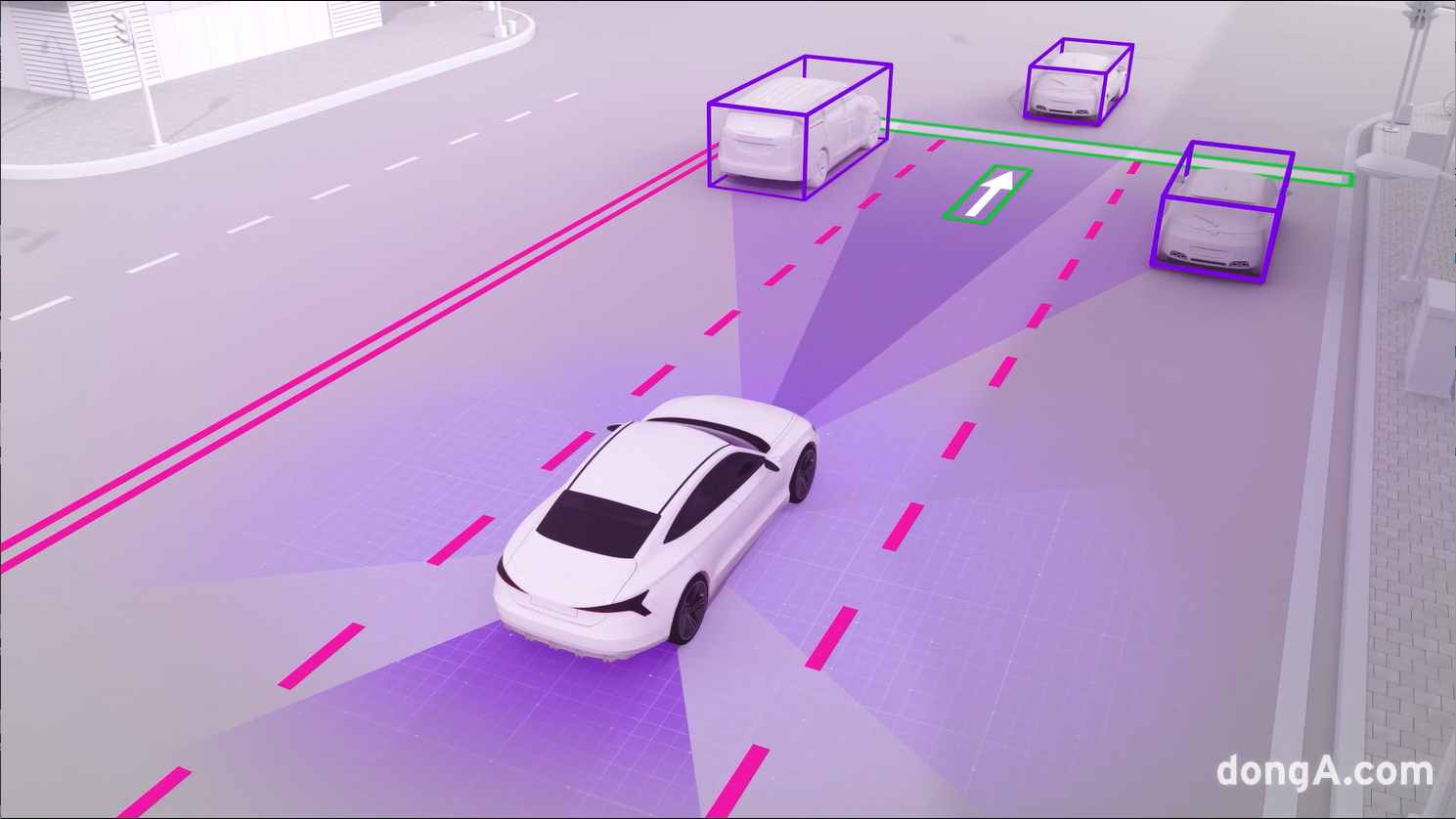
SVNet implementation screen. StradVision
The global automotive industry’s supply chain is undergoing a massive tectonic shift. The recent watchword in the automaker sector is “de-dependence,” that is, decoupling. It refers to a strategy of separating hardware and software, moving away from the existing structure in which specific automotive semiconductors and software are bundled together. This is an effort to reduce dependence on particular suppliers and enhance supply chain stability, with automakers accelerating the development of software platforms that can deliver the same functions and performance even when the semiconductor is changed. It is seen as a move to secure both production stability and technological leadership.
Until now, automakers have relied on “integrated hardware-software solutions” offered by global automotive semiconductor companies or integrated solution providers. Once they purchased a chipset, they had to use the software embedded in it as is. While this increased development convenience, it also meant that manufacturers faced limitations in securing technological leadership.
The industry calls this “black-box-type technological dependence.” For automakers, it is difficult to verify the internal logic of how the software operates, and there are constraints on fine-tuning it to match brand characteristics or the driving philosophy of each vehicle model. As dependence on a particular supplier increases, bargaining power over pricing inevitably weakens.
As price competition in the electric vehicle market intensifies and in-vehicle electronic systems become more complex, automakers’ thinking is changing. They now want “universal software” that is not tied to a specific chipset and can deliver the same safety performance regardless of which semiconductor is used. The decoupling strategy is more than a change in parts procurement methods; it can be interpreted as an attempt by manufacturers to reclaim the design authority and control rights over the automobile as a massive computer.
This shift is creating new opportunities for independent software vendors (ISVs). It also underpins the growing presence of Korean AI software companies in the global market. A representative case is StradVision. StradVision is proving its competitiveness in the global market through “SVNet,” an object recognition solution for ADAS (Advanced Driver Assistance Systems). This is vision AI software in which AI analyzes video captured by in-vehicle cameras in real time to recognize pedestrians, vehicles, lanes, traffic lights, and road signs.
The core of StradVision’s competitiveness lies in its “deep embedded AI optimization” technology. The black-box-type dependence that automakers are concerned about mainly stems from heavy algorithms that require high-performance semiconductors and large-scale computing resources. In contrast, StradVision has optimized its technology to exploit limited computing resources to the utmost, enabling high AI performance even in low-spec hardware environments. In other words, it has secured “hardware independence,” allowing desired performance to be achieved without relying on a specific semiconductor.
This competitiveness is attracting attention in the global automotive electronics industry. This is also why Aptiv, a leading global automotive parts company, is expanding its strategic cooperation with Korean AI software companies.
What automakers seek is not a closed ecosystem locked into a particular semiconductor, but an open software architecture that can deliver consistent performance across diverse hardware environments. Korean software IP that is not dependent on specific semiconductors is being evaluated as an alternative that can simultaneously address automakers’ demands for “hardware independence” and an “optimal cost structure.”
In particular, universal AI software provided by companies such as StradVision helps automakers respond more flexibly to changes in the semiconductor supply chain. Even if problems arise in the supply of a specific chip, they can switch to other semiconductors, thereby reducing supply chain risk.
This also ties into changes in the automotive industry value chain. In the past, the companies wielding influence in the automotive sector were suppliers of key hardware such as engines, transmissions, and semiconductors. In the era of future mobility, however, companies that possess software capable of operating in the lightest and most efficient manner on any hardware are likely to gain the competitive edge.
In practice, global automakers are allocating more investment to securing software platforms and ecosystems than to specific parts. This is because the factors that determine vehicle performance are shifting from mechanical perfection to software capabilities.
A self-driving industry official said, “In the mobility industry, companies with the lightest and most efficient software will now hold the initiative,” adding, “Decoupling is becoming the signal flare that hands the future of mobility over to software.”
ⓒ dongA.com. All rights reserved. Reproduction, redistribution, or use for AI training prohibited.
Popular News








 About Dong-A Ilbo