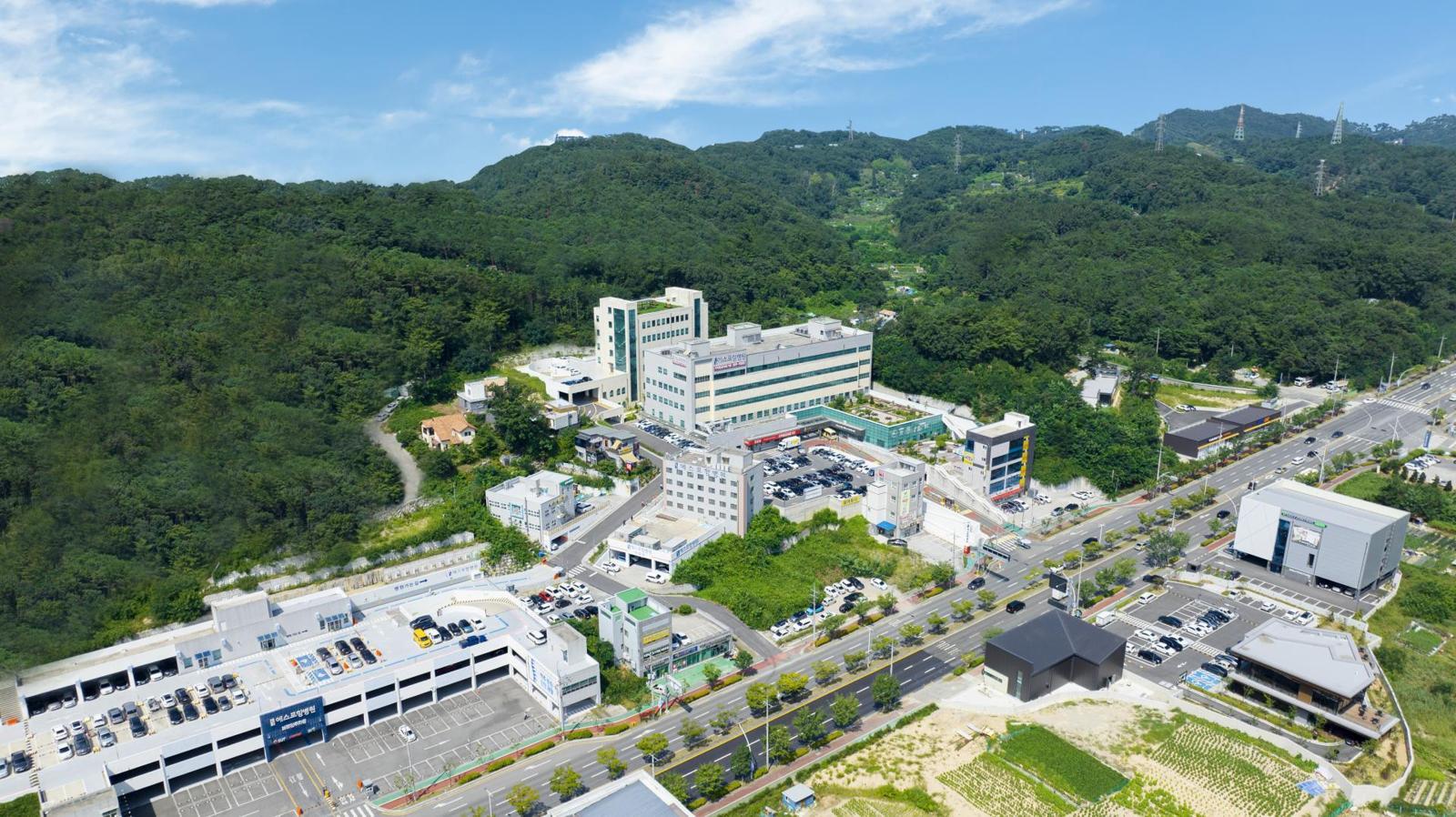
Exterior view of S Pohang Hospital.
There is a hospital that has addressed the chronic challenge of the domestic medical sector—concentration in the Seoul metropolitan area—through a specialized hospital system, overcome the limitations of regional healthcare, and earned recognition for its world-class medical services from the World Stroke Organization. That institution is S Pohang Hospital, a cerebrovascular specialty hospital designated by the Ministry of Health and Welfare, located in Pohang, North Gyeongsang Province.
S Pohang Hospital has recently declared its transition into a “smart specialty hospital” that integrates artificial intelligence (AI) and digital healthcare into its specialty care framework, drawing significant attention from the medical community.
Introduction of AI solutions… Adding “precision” to physicians’ “intuition”
S Pohang Hospital is accelerating the establishment of a smart medical environment through the adoption of AI medical solutions. By utilizing AI-based diagnostic support systems and medical data analytics platforms, the hospital is improving diagnostic accuracy and patient safety while also enhancing the work efficiency of its medical staff.
The AI solutions introduced by S Pohang Hospital have been applied first in the field of medical imaging analysis. The AI-based image interpretation system analyzes CT, MRI, and X-ray images in real time, helping to rapidly detect abnormal findings such as cerebral hemorrhage, pulmonary disease, and spinal disorders.
In particular, by adopting an AI-based integrated cerebral infarction diagnostic solution from medical AI specialist JLK, the hospital can quickly identify candidates for advanced tests such as CT angiography (CTA) and diffusion-weighted imaging (DWI). This has enabled faster diagnosis and treatment decisions, while also reducing unnecessary examinations for patients.
In addition, the hospital has introduced and is utilizing various AI solutions including NearBrain’s medical image-based cerebral blood flow prediction technology, HealthyBuddy’s digital therapeutics for chronic diseases, and AI Medic’s CCTA-based FFR (fractional flow reserve) measurement technology.
It has also strengthened its foundation as a smart specialty hospital by adopting an AITRICS solution that predicts acute critical events such as cardiac arrest and sepsis based on vital signs and electronic medical record (EMR) data, along with a range of interpretation systems from Deepnoid and Lunit.
S Pohang Hospital plans to further expand the scope of AI-based medical technologies going forward. Its policy goes beyond simply adopting AI; it aims to position itself as a specialty hospital that actively utilizes its own clinical big data.
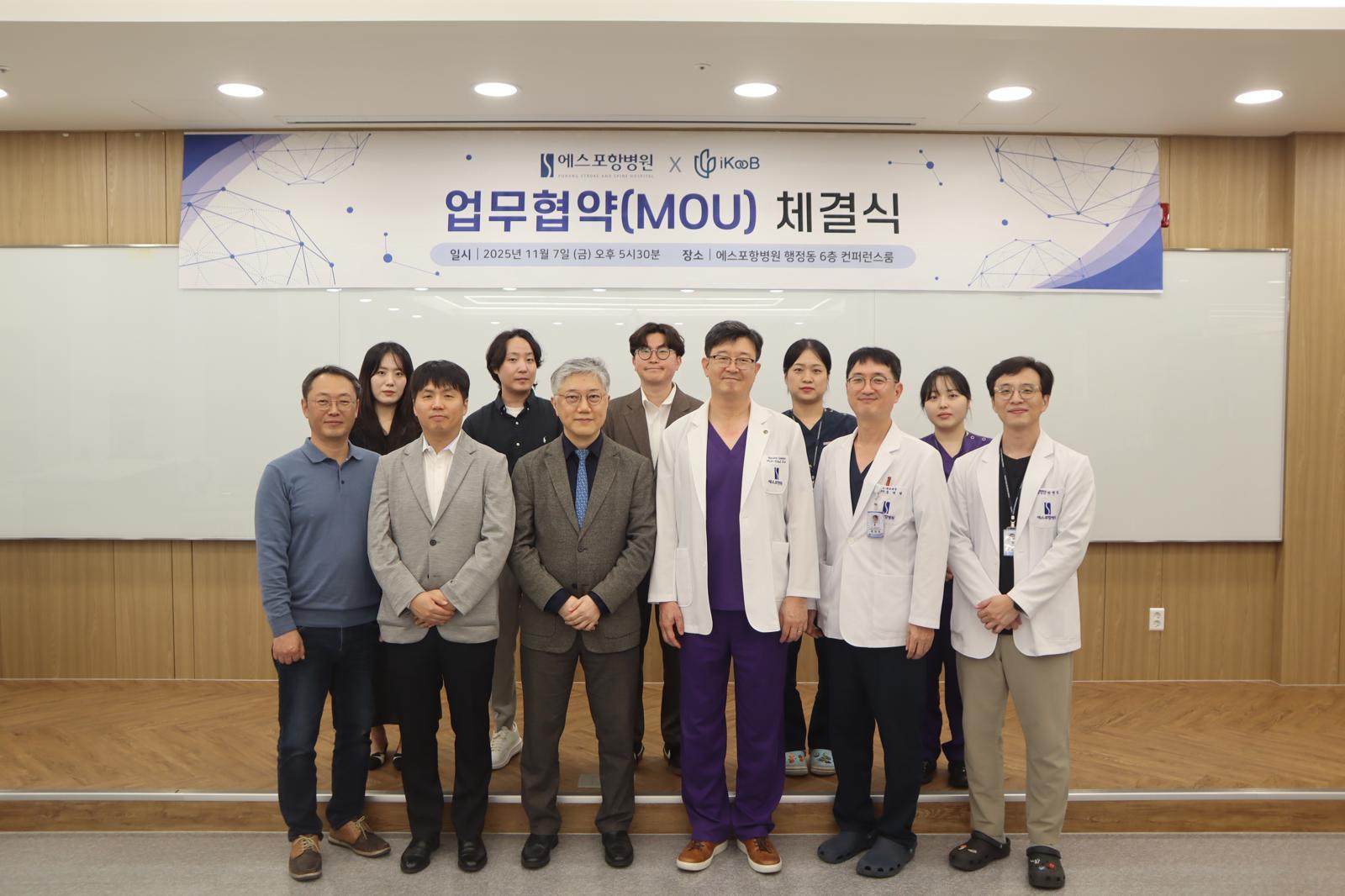
ICoop MOU signing ceremony held in November last year. Provided by S Pohang Hospital
Enhancing capabilities through clinical data… Leap toward a “research-centered specialty hospital” S Pohang Hospital is also distinguishing itself in academic research and journal publications, underpinned by the extensive clinical data it has accumulated over 17 years since opening. It is evolving beyond a treatment-focused institution into a “research-oriented hospital” that systematically organizes clinical experience into academic knowledge.
The driving force behind this research expansion is the high-quality clinical big data accumulated since its establishment. Patient data derived from neurosurgeries performed at or above the level of university hospitals reflect real-world clinical outcomes and are highly valued academically.
In particular, the Medical Research Institute, established in September 2023, has been systematically managing clinical data and creating an environment in which medical staff can conduct highly reliable research. Supported by this infrastructure, research output by S Pohang Hospital’s physicians has translated into more than 20 papers annually being published in leading domestic and international SCI/SCIE-level journals in recent years.
Notably, research papers examining how specialty hospitals helped minimize gaps in critical emergency care during the COVID-19 pandemic and in the recent conflict between physicians and the government were published in March 2022 and August 2025, respectively, attracting significant attention.
The papers analyzed that, during national healthcare crises, specialty hospitals designated by the Ministry of Health and Welfare filled the gaps left by tertiary general hospitals and played a solid “backbone” role in the medical delivery system. They also cited “expertise comparable to large hospitals” and “rapid decision-making structures” as reasons why specialty hospitals were able to demonstrate strengths in crisis situations.
A hospital representative stated, “The clinical data accumulated thus far are the hospital’s core asset and a crucial foundation for the medicine of the future,” adding, “We are building a virtuous cycle in which patients’ data become research assets that help save other patients.”
Operation of “smart wards”… Sleepless AI protects patients S Pohang Hospital is working to strengthen patient safety by establishing a smart ward system in its integrated nursing care service wards. The hospital has introduced “thynC,” a smart patient monitoring solution developed by digital healthcare specialist CEUS, to drive innovation in medical services.
ThynC is a smart monitoring system that uses wearable bio-sensors to collect and analyze patients’ vital signs in real time. It continuously measures key biometric data such as heart rate, respiratory rate, and oxygen saturation, relays them to medical staff, and sends immediate alerts when abnormal signs occur. Previously, medical staff had to check patients’ conditions directly at set intervals, but with the system in place, continuous and precise patient monitoring has become possible.
The smart ward system is expected to play a major role in strengthening safety management for acute critical patients and elderly patients. It allows early detection of changes in patients’ conditions, reduces the likelihood of emergencies, and makes rapid initial response possible when abnormal signs appear, thereby significantly enhancing patient safety.
S Pohang Hospital plans to further advance its remote management capabilities by linking the system with mobile-based medical services for patient status checks, and to expand the application of AI-based medical data analytics technologies.
Chief Hospital Director Kim Moon-chul
Building a patient-centered “mobile ecosystem”… Lowering the threshold to care S Pohang Hospital is also accelerating the development of an “in-your-hand hospital” system to enhance patient convenience. The aim is to enable most procedures—from making appointments and receiving wait-time notifications to checking test results, making payments, and obtaining inpatient life information—to be handled through a single smartphone.
In particular, a notification message-based streamlining system is helping optimize patient movement within the hospital and significantly reduce the fatigue associated with time spent on-site.
The core of the mobile system is “patient-centered service.” Through mobile devices, patients can not only book appointments but also check registration status, expected wait times, and any delays in consultation in real time. The outpatient consultation wait-time prediction system is helping to reduce long waits, and mobile notifications are enabling more efficient time management. Furthermore, with the introduction of a mobile automatic payment system, the payment process has also been simplified. After consultations, patients can complete payments remotely via mobile payment or a pre-registered “Hi-Pass” payment service, without visiting a separate payment counter.
S Pohang Hospital plans to continue expanding mobile-centric medical services, improve patient experience, and develop into a smart hospital that provides higher-quality medical services to local residents.
ⓒ dongA.com. All rights reserved. Reproduction, redistribution, or use for AI training prohibited.
Popular News










 About Dong-A Ilbo