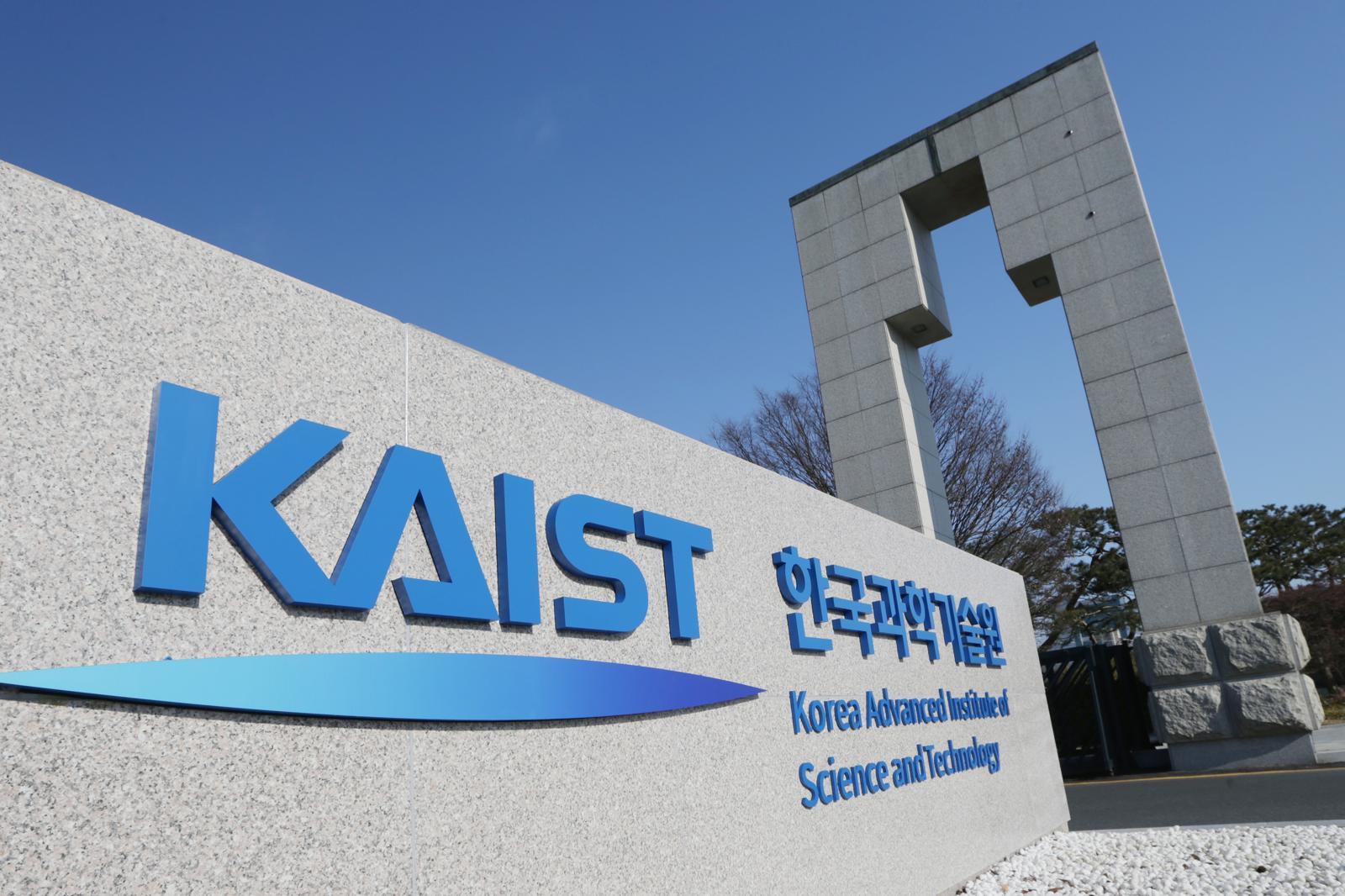
Main gate of the Korea Advanced Institute of Science and Technology (KAIST) (provided by KAIST) / News1
A domestic research team has presented findings that can simultaneously increase the efficiency and lifespan of solar cells. The study resolves the so‑called “solar cell dilemma,” in which improving efficiency shortens lifespan, and extending lifespan reduces efficiency.
KAIST announced on the 24th that a research team led by Distinguished Professor Seo Jang-won of the Department of Chemical and Biomolecular Engineering, in joint research with the Korea Research Institute of Chemical Technology, has developed a two-dimensional protective layer design technology that enhances both the efficiency and long-term stability of perovskite solar cells.
Recently, as space-based solar power has emerged as a next-generation energy technology, interest has grown in perovskite, a new material. Perovskite solar cells are next-generation solar cells that use a semiconductor material with a “perovskite structure” as the light-absorbing layer. They are characterized by lower production costs and higher efficiency compared with conventional silicon solar cells. However, their commercialization has been limited by performance degradation under high-temperature and high-humidity conditions or prolonged exposure to light.
To address this, a “3D–2D structure” strategy has been used, in which a two-dimensional layer is added on top of a three-dimensional perovskite crystal in solar cells. This two-dimensional layer serves as a thin coating film that protects the surface, but when its structure is not sufficiently robust, it can deform over time and cause performance degradation.
The research team addressed this issue by introducing a more durable two-dimensional protective layer. The new protective layer has a structure in which organic molecules firmly bridge the perovskite layers from both sides, similar to how strong adhesive fixes bricks together. As a result, the solar cell is less prone to damage and can maintain its performance for a longer period. In addition, a technique to precisely control the internal structure of the protective layer was applied.
Han Chae-yeon
AI-translated with ChatGPT. Provided as is; original Korean text prevails.
ⓒ dongA.com. All rights reserved. Reproduction, redistribution, or use for AI training prohibited.










 About Dong-A Ilbo