News1
With the prolonged “EV chasm” (a temporary stagnation in demand) triggering a harsh “barley hump” (a severe lean period) for Korea’s three major battery makers (LG Energy Solution, Samsung SDI, SK On), these companies are staking their survival on bidding for government-led energy storage system (ESS) projects. However, as fierce price competition has also emerged in this field, concerns are growing that the government’s ESS tenders are resulting in domestic companies undercutting one another, rather than delivering the originally anticipated benefits of supporting the domestic battery ecosystem.
The K-battery industry has recently been gripped by a sense of crisis. In December alone last year, battery contracts worth KRW 28 trillion that had been signed with global automakers were either cancelled or scaled back. Given this situation, Minister of Trade, Industry and Energy Kim Jeong-gwan effectively hinted at the possibility of industrial restructuring at an industry roundtable earlier this year, saying, “Please seriously consider whether the current system of three major battery makers can be maintained.”
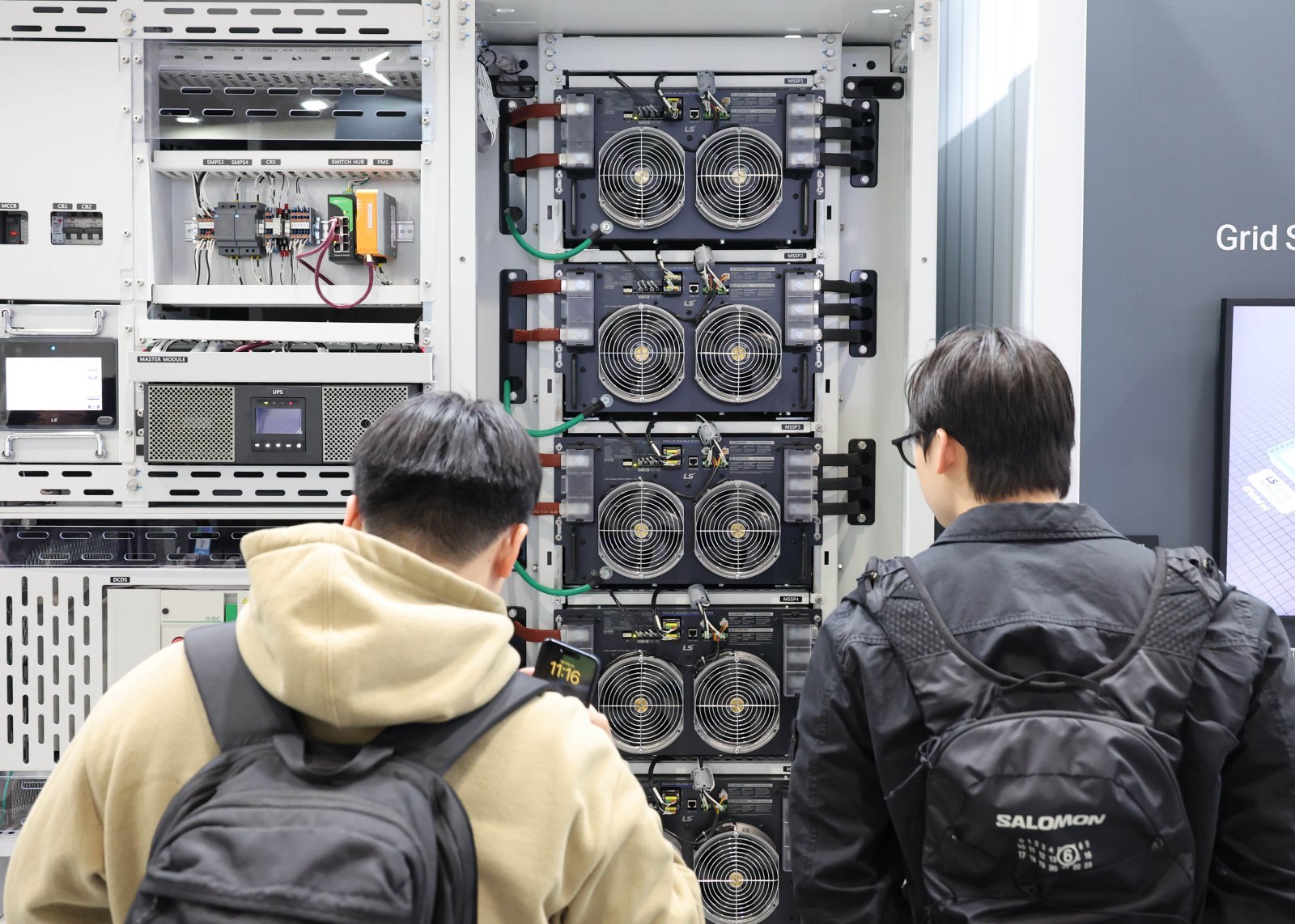
For battery companies, securing ESS orders is a breakthrough that enables them to operate idle production lines. In particular, as electricity demand surges due to the expansion of artificial intelligence (AI) data centers, the global ESS market is forecast to more than double from USD 50.8 billion (about KRW 74 trillion) last year to USD 105.9 billion (about KRW 155 trillion) by 2030.
Against this backdrop, the government’s first and second centralized ESS market tenders, each worth KRW 1 trillion, have become a battleground for the survival of domestic battery firms. Samsung SDI in the first round and SK On in the second each secured more than half of the volumes and were seen as winners, but the reality behind the scenes is different. Companies submitted low-price bids that minimized margins.
A senior executive at one battery manufacturer said, “Because everyone bids at the lowest price, even when a company wins an order, the profit is extremely thin,” adding, “In the second tender, the weight of the price score was 50%, 10 percentage points lower than in the first round (60%), yet the price factor still carries a high weight.”
There is a reason companies cling to government-led ESS orders despite the slim margins. Securing a track record of orders is essential for entering large overseas markets such as North America. Delivery records for large-scale projects led by the home government serve as a “guarantee” when seeking to persuade major foreign power companies in the future.
After the second tender, representatives from the three major battery makers and other key industry players have reportedly been meeting government officials, pleading that “to fulfill the original aim of revitalizing the domestic ecosystem, the weight of price evaluation should be lowered or a minimum bid price should be set.” However, it remains uncertain whether the system will be improved in the third additional tender scheduled for June. The Ministry of Climate and Energy, which is in charge of the bidding, is showing reluctance, adhering to the principle of “competitive bidding.” Under this cutthroat competition, the concerns of K-battery companies searching for a way to survive are deepening further.
ⓒ dongA.com. All rights reserved. Reproduction, redistribution, or use for AI training prohibited.
Popular News








 About Dong-A Ilbo