Riding the wave of the artificial intelligence (AI) revolution, SK has entered a new heyday by recording unprecedented profitability in its semiconductor business. In particular, leveraging its overwhelming leadership in the high bandwidth memory (HBM) market, an essential component for AI servers, the group set new annual performance records, while revenue also hit an all-time high, solidifying its status as a “memory powerhouse.” Having completed its rebalancing, the SK Group now spans the entire spectrum of global AI solutions. This article reviews how the SK Group has transformed itself from a semiconductor component supplier into a designer of the global AI ecosystem.
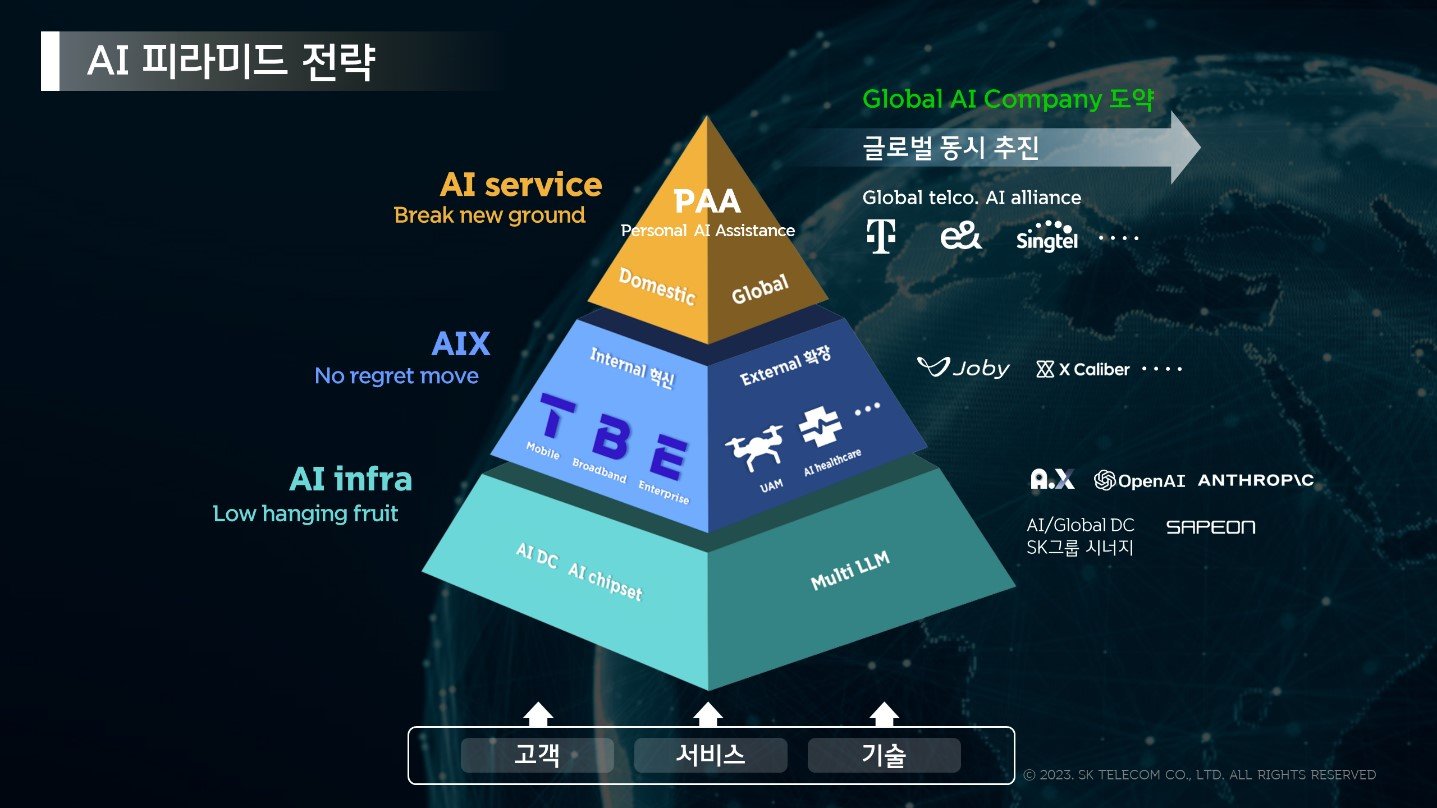
In September 2023, SK Telecom (hereinafter SKT) announced its “AI Pyramid Strategy,” the key to realizing its vision of becoming a “Global AI Company.” The strategy is structured in a pyramid form, grouping into stages the model of “self-strengthening,” which enhances AI technology and develops AI services to build closer relationships with customers, and “collaboration,” which centers on AI alliances.
To this end, SKT decided to nearly triple its share of AI-related investments from 12% over the past five years (2019–2023) to 33% over the next five years (2024–2028). The revenue target for 2028 is set at more than KRW 25 trillion.
AI data centers, semiconductors, LLMs… the base of the pyramidThe AI Pyramid consists of three layers: ▲AI Infrastructure ▲AIX ▲AI Services. The bottom layer, “AI Infrastructure,” is where SKT’s advanced technological capabilities are concentrated. It includes AI data centers (DCs), AI semiconductors, and multi-LLMs (large language models).
AI Pyramid Strategy announced by SKT in 2023.
SKT’s commitment to taking the lead in building a “Korean-style AI ecosystem” by establishing an AI infrastructure superhighway bore fruit last June when it formalized plans to build a hyperscale AI DC (data center) in cooperation with AWS (Amazon Web Services) and the city of Ulsan.
SKT plans to expand the Ulsan AI DC to a total capacity of more than 1 GW by seeking broader cooperation with global partners, including AWS. By developing second and third Ulsan AI DC models, it intends to attract global capital investment into Korea and turn the country into Asia’s largest AI hub. In October last year, at the group level, SK also entered into a strategic partnership with OpenAI to pursue the establishment of an AI DC in the country’s southwestern region.
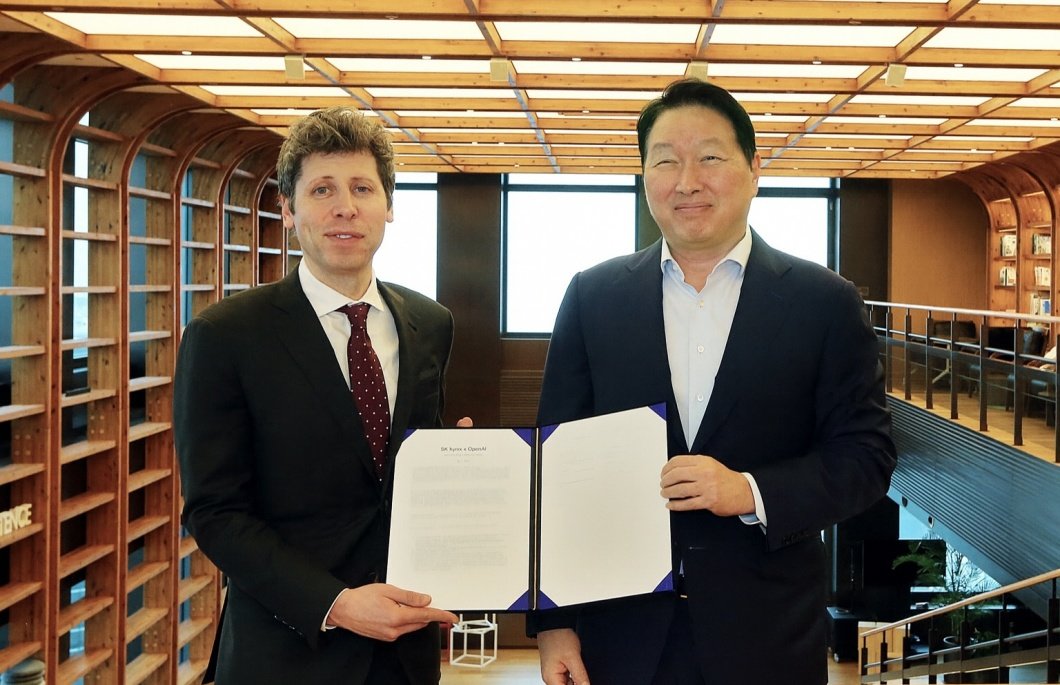
SK Group Chairman Chey Tae-won (right), OpenAI CEO Sam Altman (left), and other executives of both companies signed a Memory Supply Letter of Intent (LOI) and a Memorandum of Understanding (MOU) on cooperation for an AI DC in the southwestern region at SK Seorin Building in Jongno-gu, Seoul, in October last year.
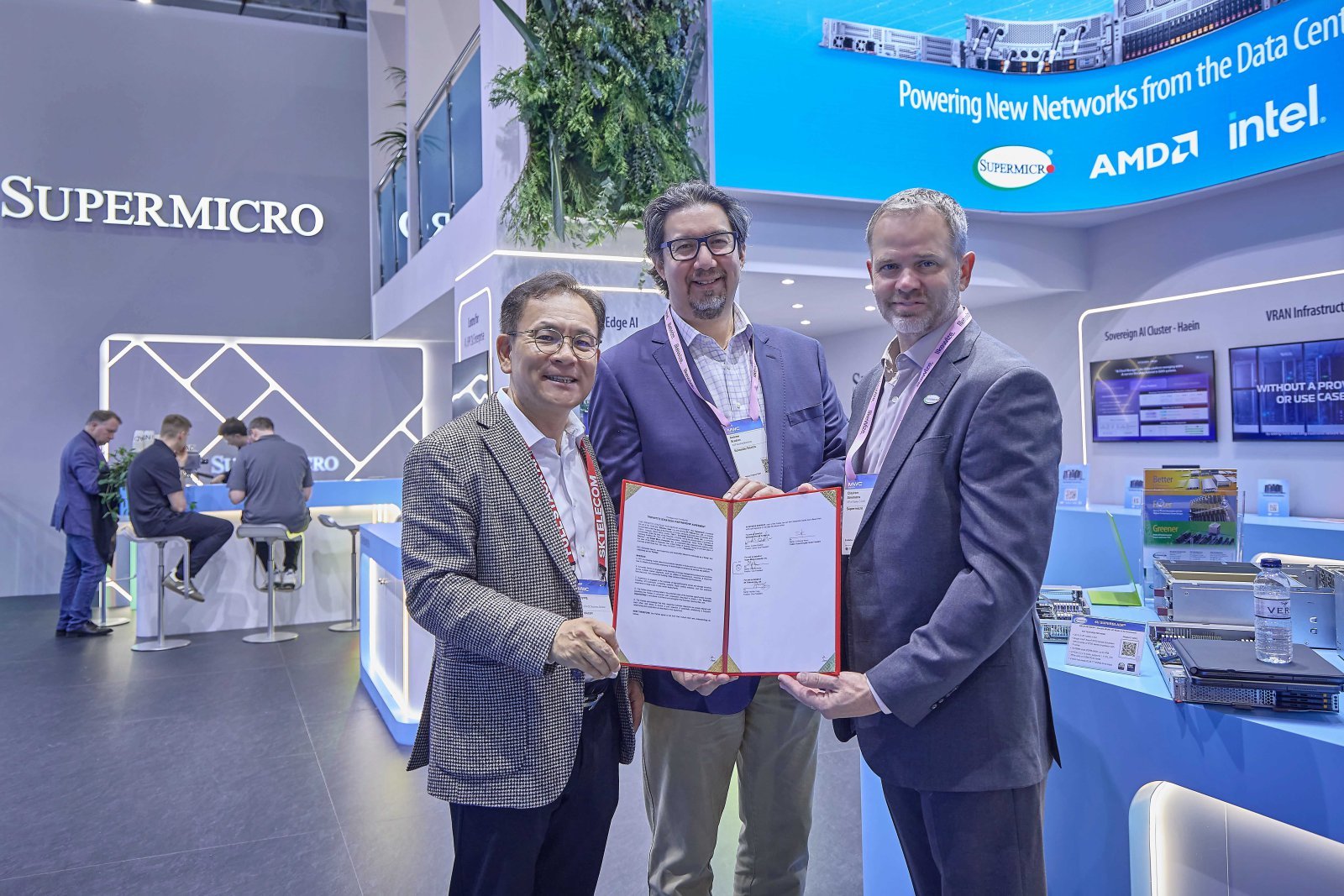
SKT has also laid the groundwork for a new AI DC construction model. At MWC26 in Barcelona, Spain, the company concluded a tripartite business agreement with global server manufacturer Supermicro and Schneider Electric, a global player in AI DC MEP (mechanical, electrical, and plumbing), to secure an integrated solution based on a pre-fabricated modular approach. With its accumulated AI DC operation experience at the core, SKT plans to combine the strengths of its global partners to shorten AI DC construction timelines and alleviate supply bottlenecks through this integrated model.
In addition, SKT signed a business agreement with Panesia, a domestic startup possessing global-level technology in CXL (Compute eXpress Link), to jointly develop the next-generation AI DC architecture based on CXL. The essence of this collaboration is to enhance AI processing efficiency and improve AI DC economics using CXL-based technology without unnecessary equipment expansion. The two companies plan to transition from a fixed server-unit structure for CPU, GPU, and memory to a more flexible architecture where these resources can be interconnected and combined independently of server units.
From left: Ha Min-yong, Head of SKT’s AI DC Business; Andrew Bradner, Senior Vice President at Schneider Electric; and Clay Simmons, Vice President at Supermicro, during a commemorative photo session at the Supermicro booth at MWC26.
Once a new DC in the Seoul metropolitan area comes online following the Ulsan AI DC, SKT will secure more than 300 MW of total data center capacity. With higher utilization rates, the company expects annual revenue of more than KRW 1 trillion after 2030.
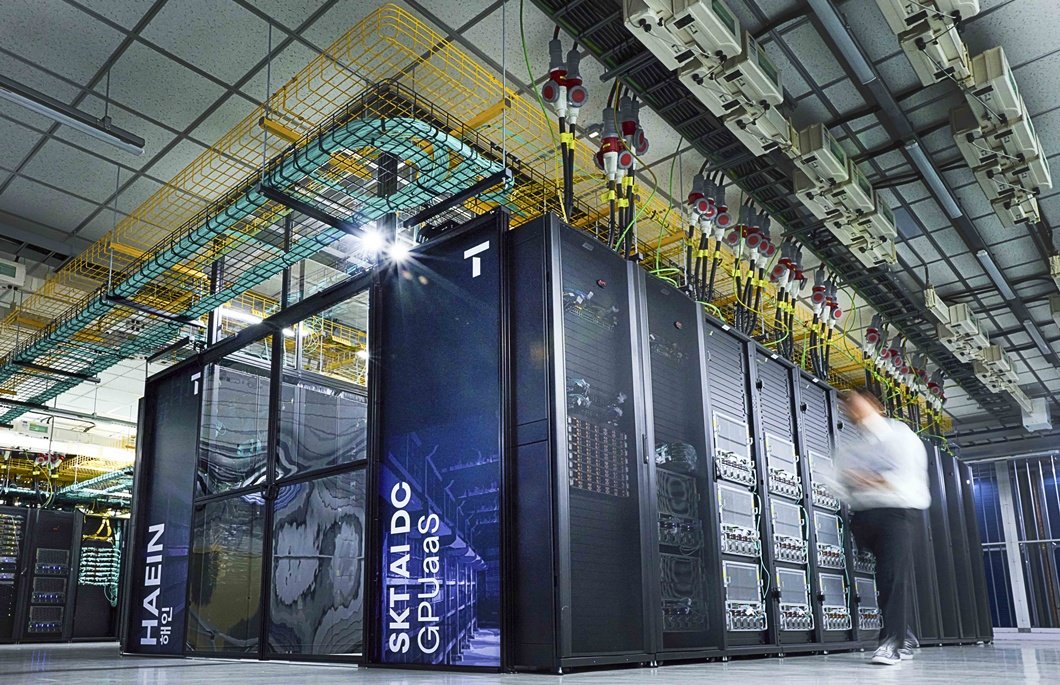
Meanwhile, in July last year SKT was selected as a supplier for the “AI-Computing Resource Utilization Infrastructure Enhancement (GPU Lease Support) Project” announced by the Ministry of Science and ICT, taking on a role to support the development of the national AI foundation model. To this end, SKT installed more than 1,000 units of NVIDIA’s latest AI chip, the “Blackwell B200,” as a single cluster at its Gasan AI DC, creating “Haein,” which at the time of its launch was the largest and highest-performance GPUaaS (GPU-as-a-Service, providing GPU resources in a cloud format according to customer demand) in Korea.
The B200 cluster built at SK Broadband’s Gasan AI DC.
The name Haein was inspired by Haeinsa Temple, where the Tripitaka Koreana is stored. It reflects SKT’s ambition to become a “Korean-style sovereign AI” infrastructure that houses the digital-age equivalent of the Tripitaka Koreana. Haein also received the “Best Cloud Solution” award at the GSMA Global Mobile Awards (GLOMO) 2026, a globally recognized honor.
The SKT consortium, the core organization of the proprietary AI foundation model project, includes leading companies from various fields: Krafton, the largest listed game company in Korea; 42dot, a strong player in mobility AI; Rebellions, a top-tier domestic manufacturer of inference AI semiconductors (NPUs); Riiid Liner (Riner), an AI agent specialized in expert knowledge and information retrieval; and SelectStar, which provides technology to secure data stability for AI models.
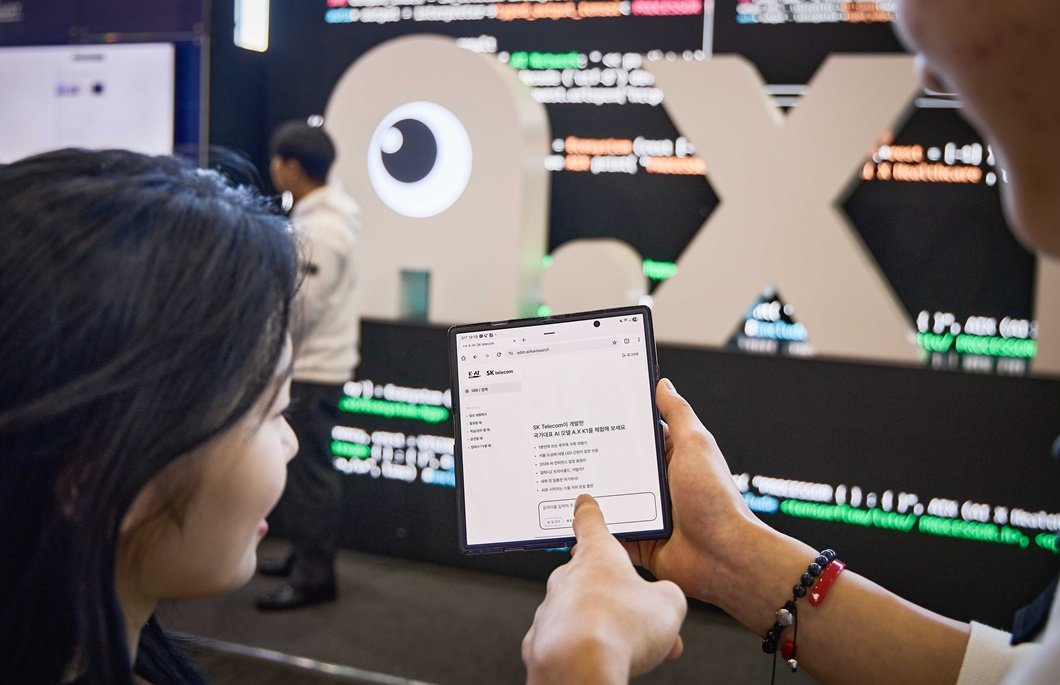
In January this year, SKT moved into the second phase of its “proprietary AI foundation model” project. The consortium’s “A.X K1 (A.DotX K1)” drew attention as Korea’s first ultra-large AI model exceeding 500 billion parameters, with 519B parameters. The goal is to scale this to the 1,000B (1 trillion parameters) level and beyond, securing AI sovereignty and driving innovation across industries. The company also plans to advance multimodal technology so that, starting with image data, the model can process voice and video data from the second half of this year.
In the LLM field, SKT is pursuing a multi-strategy. It is taking a two-track approach: “self-strengthening,” which involves advancing its own LLMs based on high-quality data accumulated over decades, and “collaboration,” which entails forming joint fronts with domestic and global AI players such as Anthropic, OpenAI, and Konan Technology. The key lies in having a diversified lineup and a platform that integrates them.
At a press conference held on the 1st (local time) ahead of MWC26, SKT CEO Chung Jae-heon said, “AI DCs can be likened to the new ‘heart’ of the Republic of Korea, and ultra-large LLMs to its ‘brain,’” adding, “By combining SKT’s AI capabilities with collaboration with domestic and global partners, we will lead true AI nativeness (AI embedding) for Korean customers and enterprises.”
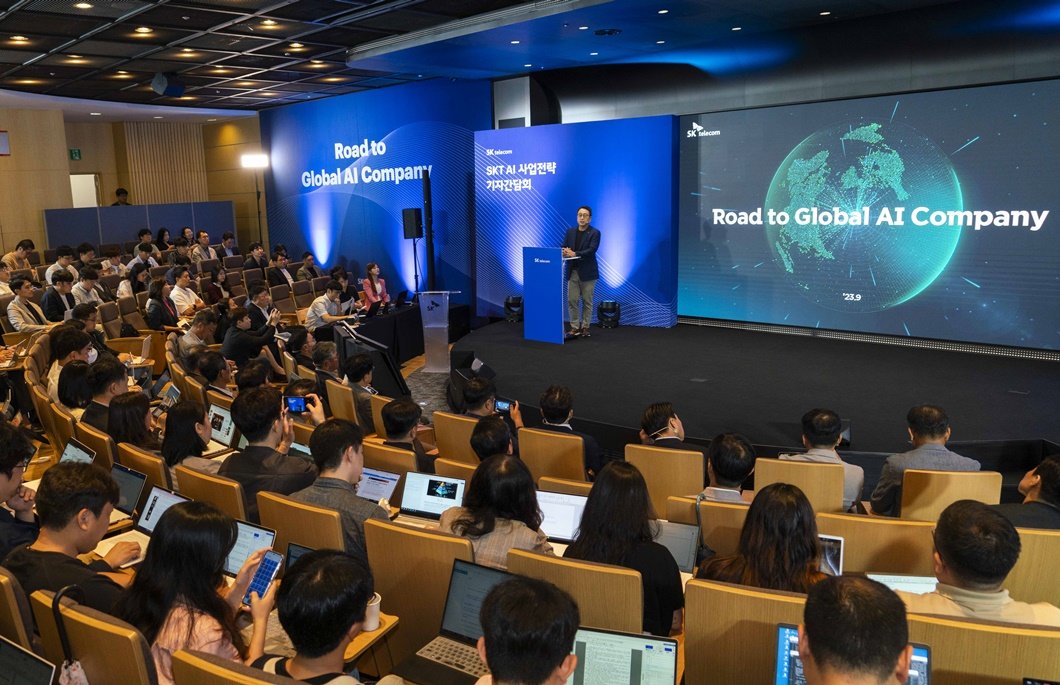
AI across core businesses… the midsection of the AI ecosystem pyramidAIX, the middle layer of the AI Pyramid, refers to embedding AI across SKT’s core businesses, including mobile, broadband, and enterprise. The strategy is to transform productivity and customer experience while extending SKT’s AI capabilities into adjacent areas such as mobility, AI healthcare, media, and ad tech (Ad.Tech), thereby enhancing overall value.
Scene from SKT’s AI Strategy Press Conference held in 2023.
SKT expects that by applying AI to marketing and customer centers, such as AI-based contact centers (AICC), and by operating network infrastructure on an AI basis to improve efficiency, it will be able to reduce costs by around 20–30% or more in the mid to long term compared with the present.
The company also plans to evolve SK Broadband’s Btv into an AI TV to deliver new customer experiences. For example, “AI curation,” where the TV identifies individuals and displays personalized content, and “AI Home,” which allows users to enjoy various media services through conversations with an AI agent, fall into this category.
SKT plans to expand its AI contact center (AICC), which supports AI consultations for financial customers by combining multi-LLMs with its existing AI solutions, into a data platform business focused on manufacturing. In addition, its generative AI business will target public institutions and financial customers that have strong needs for security and specialized services with on-premise deployments, while offering SaaS-based packaged solutions to general corporate clients.
The company will also extend its business domain into AI healthcare, including UAM and Excalibur, to continue driving AI innovation. It further plans to pursue AI-driven innovation in media and ad tech through M&A and other means.
A personal assistant “just for me”… 11 million cumulative AI service subscribersAt the very top of the pyramid, in AI Services, the representative offering is “A.Dot,” SKT’s Korean-language LLM service. First introduced in 2022, it was officially launched the following year. More than two years after its full launch, A.Dot’s cumulative subscribers have surpassed 11 million.
Its core feature is AI Call. Through communications innovations that only a telecom operator can provide, it strengthens new types of connections. AI Call recommends people to call based on previous call history and uses AI to analyze conversations in real time, providing summaries focused on key information. This feature has been particularly popular with iPhone users, whose devices do not natively support call recording.
SKT plans to evolve A.Dot beyond an AI call service that merely summarizes conversations into “a personal AI assistant just for me.” It intends to integrate AI across all aspects of daily life, including waking up, commuting, and going to bed. The “A.Dot Note” and “Briefing” services, launched in beta last year, are representative examples.
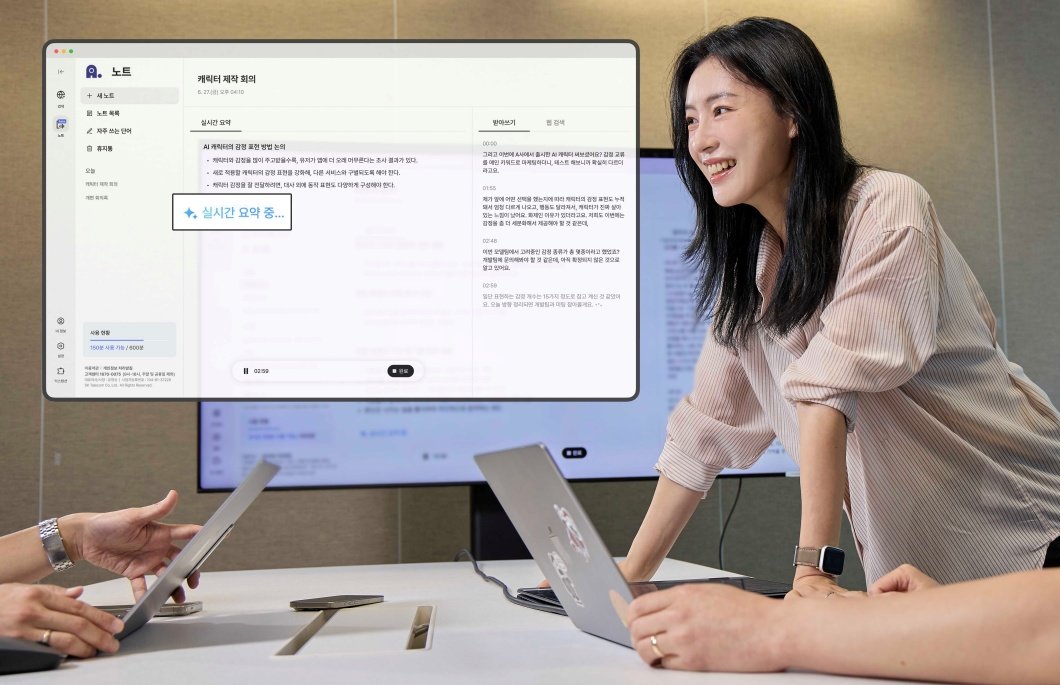
A.Dot Note is a service that uses AI to record every moment involving speech. In everyday settings such as meetings, lectures, and counseling sessions, AI transcribes, summarizes, and organizes spoken content in real time.
The Briefing service was developed to reinforce A.Dot’s identity as an “AI personal assistant.” It could be described as an “ambient agent” service that provides information naturally by comprehensively analyzing the user’s daily life. For customers who opt in, the service proactively delivers information considering context and circumstances, even without explicit requests. For example, at the start of the day, the Briefing service may recommend weather information along the user’s planned route based on scheduled appointments, as well as content tailored to the user’s interests.
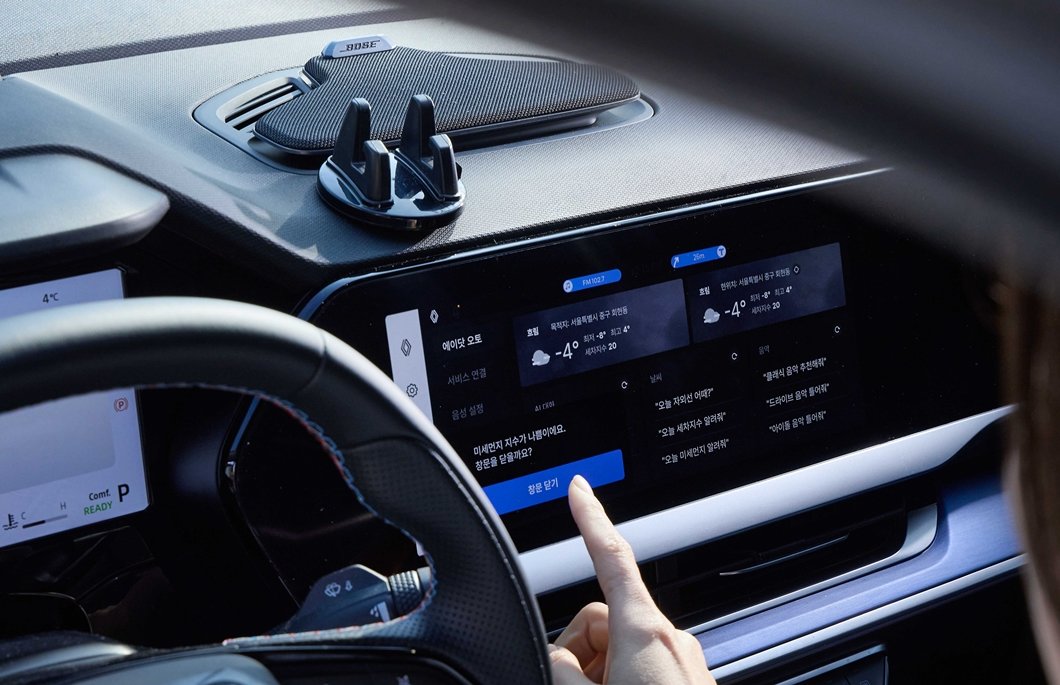
SKT has applied its next-generation in-vehicle AI agent “A.Dot Auto” to Renault Korea’s new vehicle “Filante.”
Renault Korea’s new vehicle “Filante” is equipped with “A.Dot Auto,” SKT’s next-generation in-vehicle AI agent. A.Dot Auto goes beyond simple command execution, functioning as an intelligent AI agent that comprehensively understands the driver’s driving patterns and real-time driving conditions.
A.Dot Auto enables voice control of major vehicle functions such as infotainment services—including calls, news briefings, T Map (navigation), FLO (music)—as well as air-conditioning systems that manage in-cabin temperature and air quality, and window operation. For instance, when the driver gets into the car for the commute, A.Dot Auto may propose the office as the destination based on past driving patterns, or suggest closing the windows when fine dust levels are high and the windows are open, offering a tailored service suited to the situation.
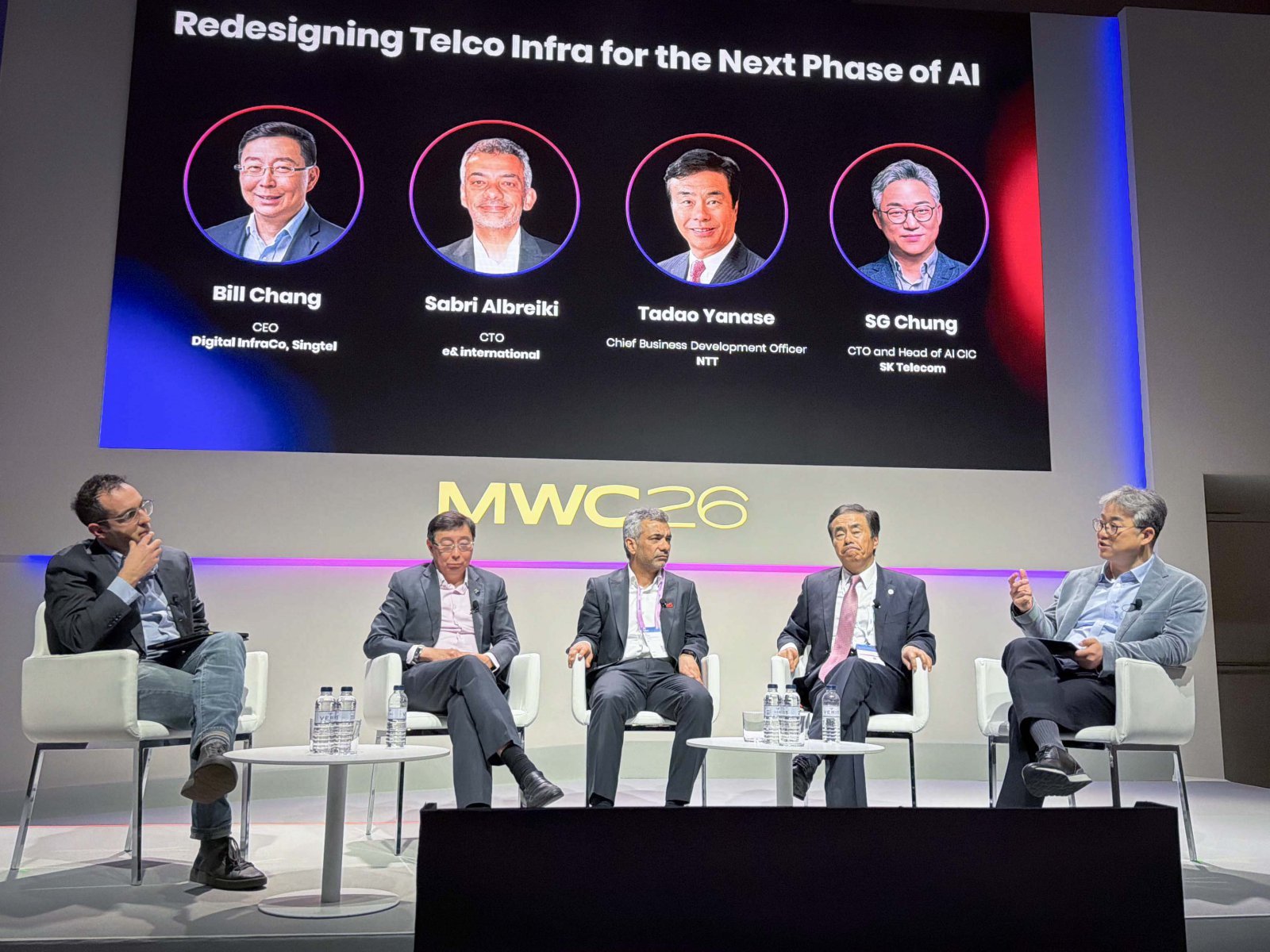
Executives from major global telecommunications companies participate in a panel discussion at an AI DC-related conference held as a side event at MWC26 on the 2nd (local time). From left: Kerem Arsal, Principal Analyst at Omdia; Bill Chang, CEO of Singtel Digital InfraCo; Sabri Albreiki, CTO of e& international; Tadao Yanase, Chief Business Development Officer (CBDO) at NTT; and Chung Seok-keun, Head of SKT’s AI CIC.
Building on its proven AI services and operating know-how in Korea, SKT also plans to develop a global PAA (Personal AI Assistant) and rapidly expand it worldwide. To this end, it has formed a Global Telco AI Alliance with Deutsche Telekom, e&, Singtel and others, agreeing to jointly develop telco-specialized LLMs and an Intelligence Platform.
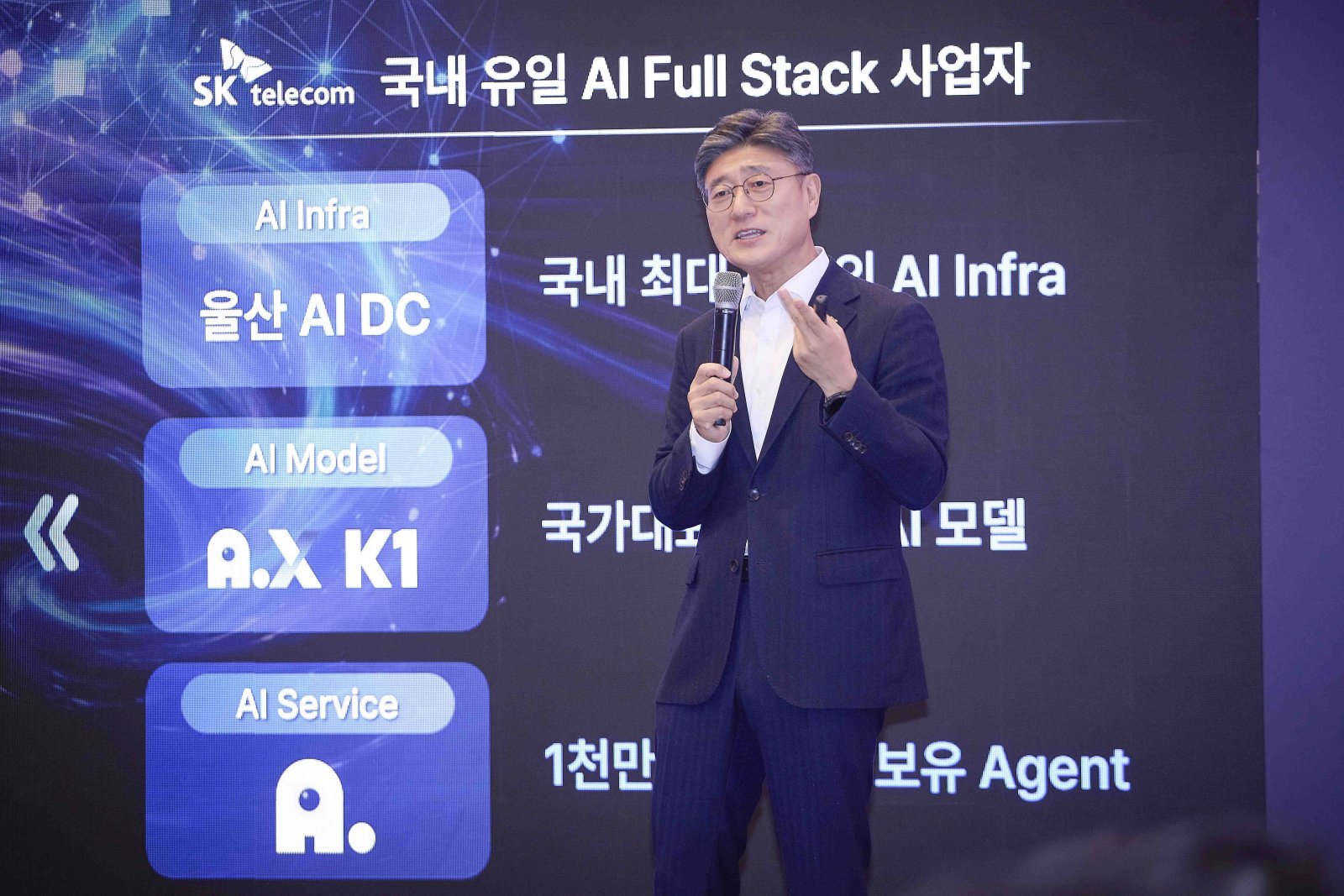
“Transforming everything from the ground up”… declaring “Full-Stack AI” at MWC26Ahead of MWC26, SKT CEO Chung Jae-heon announced an “AI Native” innovation strategy that includes a reorganization of AI infrastructure and large-scale investment plans. He stated in particular, “We will fundamentally transform SKT’s corporate culture to be AI-centric.”
On the 1st (local time), SKT CEO Chung Jae-heon held a press conference in Barcelona, Spain, where MWC26 took place, and announced an “AI Native” innovation strategy that includes the restructuring of AI infrastructure and large-scale investment plans.
Currently, more than 2,000 AI agents are already in use for practical work in fields such as marketing, legal affairs, and PR. Going forward, SKT plans to implement a “one-person, one-AI” scheme under which every employee will use at least one AI agent.
At MWC26, the company showcased its “Full-Stack AI” capabilities across AI infrastructure, models, and services. In an approximately 992㎡ (about 300 pyeong) exhibition space, SKT set up zones for ▲AI Infrastructure (AI DC, Network AI, Marketing AI) ▲AI Models ▲AI Services ▲AI Ecosystem, introducing 27 items and various collaborations with domestic and international partners.
 {
$(document).ready(function () {
//AD 광고 히스토리(우공역)
dataString = "ad_area=3";
// alert(dataString);
$.ajax({
type: "POSt",
url: "/proc/ad_history",
data: dataString,
headers: {
"cache-control": "no-cache",
"pragma": "no-cache"
},
dataType: "json",
cache: false,
async: true, // true: 비동기, false: 동기
success: function (data) {
if (data[)
Popular News








 About Dong-A Ilbo